

Hydration Journal
Why Drinking More Water Isn't Fixing Your Dehydration


You carry a 32-ounce water bottle everywhere. You refill it twice before lunch. You've heard the advice your whole life — drink more water — and you're doing it. And yet by 2pm you're foggy, your lips feel weirdly dry, and you've got that dull pressure behind your eyes that makes concentration feel like lifting something heavy. You're doing everything right. It's not working.
Here's the thing nobody told you: the problem isn't how much you're drinking. It's what's in the water — or rather, what isn't.
Why Water Alone Doesn't Hydrate Your Cells
Water doesn't just pour into your cells like filling a bathtub. It enters through protein channels called aquaporins — microscopic gateways embedded in every cell membrane in your body. And those channels don't open on demand. They're regulated by electrolytes, primarily sodium and potassium. Without an adequate electrolyte environment on both sides of the cell membrane, the aquaporins function sluggishly and water moves through your system without ever reaching the places it's needed most.
This isn't theoretical. Aquaporin research earned a Nobel Prize in Chemistry in 2003, and the mechanism is well established: cellular hydration is an active, electrolyte-dependent process. Drinking more water doesn't solve a broken entry system. It just gives more water nowhere to go.
The Pump Every Cell Depends On
Underneath the aquaporin story is something even more foundational — the sodium-potassium pump. Every single cell in your body runs one. It's a protein embedded in the cell membrane that continuously moves 3 sodium ions out of the cell for every 2 potassium ions it pulls in. That specific exchange creates an electrical gradient — a difference in charge across the membrane — and that gradient is what allows water to follow the sodium.
When you're low on either electrolyte, the pump underperforms. The gradient weakens. Water doesn't move efficiently across membranes. Your cells can be sitting in a bath of water and still be functionally dehydrated because the transport mechanism isn't working at full capacity.
This is cellular-level dehydration, and drinking another glass of plain water doesn't fix it. If anything, it dilutes the electrolytes you already have.
The Flushing Problem
When you drink large volumes of plain water without replacing electrolytes, you're not just failing to hydrate — you may be actively making things worse. Your body maintains a precise electrolyte concentration in your blood. Flood the system with plain water, and you dilute that concentration. Your kidneys respond by excreting the excess, taking remaining electrolytes with it. In severe cases — seen in endurance athletes who drink only water — this progresses to hyponatremia, a dangerous blood sodium drop that causes confusion and nausea.
You don't have to run a marathon for this to matter. Drinking 100+ ounces of plain filtered water daily while eating a low-sodium diet is enough to nudge most people into a low-grade electrolyte deficit that never fully resolves.
75% of Americans Are Chronically Dehydrated — Most of Them Drink Water
Studies have estimated that roughly 75% of Americans are chronically dehydrated. That number surprises most people, because most Americans do drink water. They carry bottles. They have apps reminding them. The gap isn't water intake — it's electrolyte intake.
The average American gets far less dietary potassium than the recommended 4,700mg per day, and sodium skews heavily toward processed food sources that don't come packaged with the other electrolytes the body needs to actually use it. Drinking more water into that deficit is like adding printer paper to a printer with no ink. The infrastructure for the job is missing.
The Irony of Filtered Water
There's a cleaner way to hydrate.
Try VitaWild — Save 55% TodayFree shipping · 30-day money-back guarantee · Cancel anytime
Here's a counterintuitive one: the cleanest water you can buy is also, on its own, the least hydrating.
Reverse osmosis filtration strips water down to essentially pure H₂O. Contaminants removed — along with naturally occurring minerals: calcium, magnesium, potassium, trace sodium. The result is chemically pure, mineral-empty water. Tap water, depending on your municipality, actually contains small but meaningful amounts of those minerals. RO-filtered water has almost none. If you upgraded to a premium home filtration system and started drinking even more of it, you may have inadvertently deepened a mineral deficit without realizing it.
Your Urine Color Isn't the Whole Story
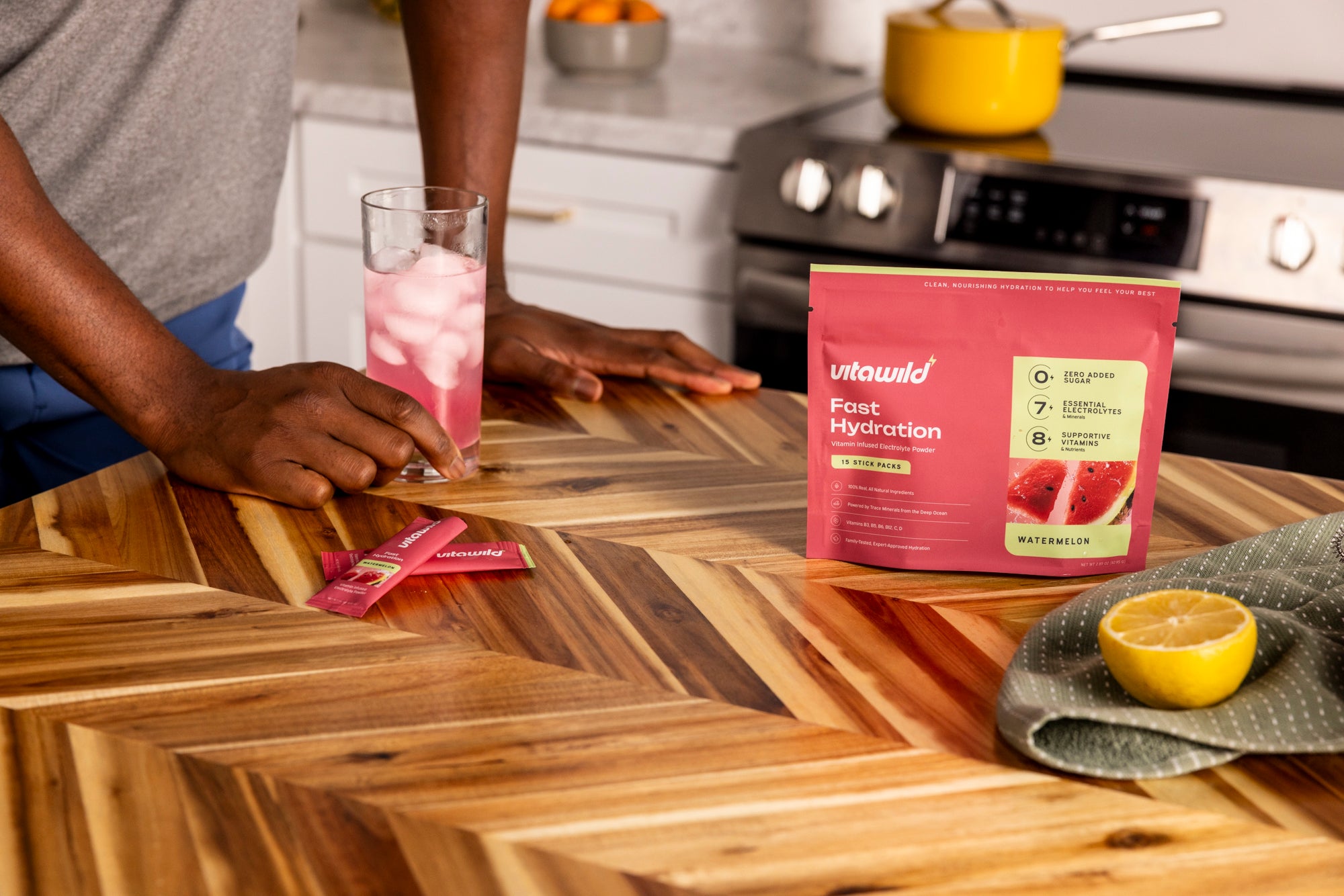
Most people use urine color as their hydration gauge, and it's not wrong — dark amber is a clear signal. But pale, clear urine isn't proof your cells are hydrated. It's proof you're drinking enough to dilute your urine. Those are different things.
Pale urine and cellular dehydration can coexist. When your urine runs consistently clear but you still feel tired, cramped, or foggy, your kidneys are working fine — but your cells may not be getting what they need to absorb the water arriving at their door.
The Symptom Pattern to Watch
If you drink 80 ounces or more daily and still experience any of the following, electrolyte deficiency is the more likely explanation than insufficient water:
Muscle cramps — especially leg cramps at night — point directly to low magnesium and potassium. These minerals govern muscle contraction and relaxation. Without them, muscles fire when they shouldn't.
Brain fog tracks with electrolyte gradients across neuron membranes. The brain is roughly 73% water by weight, and when those gradients slip, thinking feels slower and less precise.
Afternoon fatigue that coffee doesn't actually fix — especially that reliable 2–3pm crash — is a hallmark of electrolyte depletion compounding a natural cortisol dip.
Dry lips despite drinking plenty is one of the quieter signals. Mucous membranes rely on cellular hydration, not just fluid volume.
If two or more match your day, you're not drinking wrong — you're drinking incomplete.
The Fix Isn't Complicated
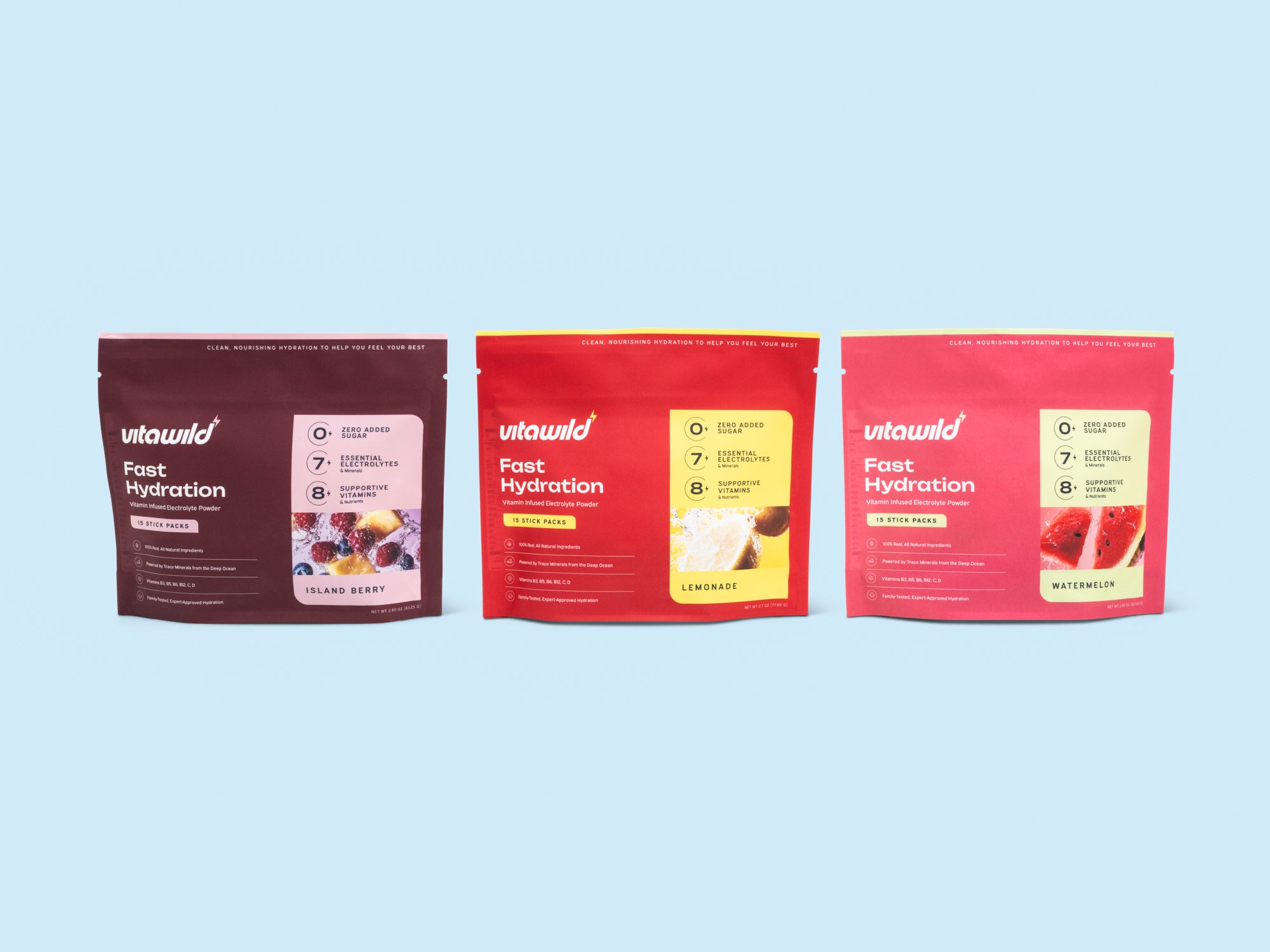
You don't need to overhaul anything — you need to give your water something to work with. The challenge is finding an additive that replaces what's missing without trading the problem for a list of sugar, artificial dyes, or synthetic sweeteners. Most electrolyte products on the market do exactly that trade.
What to Add to Your Water (and What to Skip)
There are a few approaches, ranging from DIY to packaged, each with honest trade-offs.
Sea salt and lemon juice is the most stripped-down option — a pinch of quality sea salt in 16oz of water with a squeeze of lemon. Sodium, a trace of potassium, real cellular effect. Costs almost nothing. Tastes like exactly what it is: salted lemon water. The mineral profile is narrow, and you'd need to stack several sources to approach a full spectrum.
Coconut water brings natural potassium — around 470mg per cup — plus small amounts of sodium, magnesium, and calcium. It's a legitimate food-based option, though electrolyte content varies by batch, it adds 45–60 calories per serving, and the sodium level is too low to meaningfully support the sodium-potassium pump on its own.
Electrolyte tablets like Nuun are low-sugar and convenient — a better call than most sports drinks. The limitation is the mineral counts: 300mg sodium and 150mg potassium per tab is a start, but sits below where the sodium-potassium pump operates efficiently.
Full electrolyte mixes are where the formulation work matters. For cellular hydration, you need meaningful numbers — and ideally a trace mineral component to replace what filtration removes.
VitaWild was built around this exact problem. Each stick delivers 450mg sodium and 800mg potassium — the two electrolytes that drive the sodium-potassium pump — alongside 75mg magnesium and 80mg calcium. The 100mg of ConcenTrace® trace minerals adds 84+ naturally occurring ionic minerals, absorbed immediately without digestion because they carry an electrical charge that makes them bioavailable the moment they enter the bloodstream. That's different from chelated or oxide mineral forms, which need to be converted first.
The 500mg of Coconut Water Powder adds natural hydration cofactors that support fluid retention at the cellular level. Zero added sugar, nothing artificial. One stick in 16oz of filtered water turns mineral-empty RO water into something your cells can actually work with. The Lemonade and Watermelon flavors are mild enough that you forget you're doing something intentional.
Drink Smarter, Not More
The goal was never to drink more. It was to drink in a way that actually reaches your cells. Once you understand that water is just the vehicle — and that electrolytes are what make the delivery work — the fix is obvious and genuinely small. One change to what's already in your water bottle. The kind of change that makes 2pm feel different than it does right now.
Related reading: What Are Electrolytes, Really? · Hydration After 40: Why Your Needs Change · The Real Reason You Crash Every Afternoon
Ready to feel the difference?
Try VitaWild — Save 55% TodayFree shipping · 30-day money-back guarantee · Cancel anytime


