

Hydration Journal
Restless Legs at Night? You Might Be Low on These Two Minerals

Edited October 5, 2026
It starts the same way every time. You're lying in bed at 11pm, finally still, finally ready to sleep — and then your legs won't cooperate. There's no good word for it: a crawling, prickling, electric restlessness deep in the muscle that doesn't hurt exactly, but makes staying horizontal feel genuinely impossible. You shift positions. You stretch. You get up and walk to the kitchen. It eases for a moment, then returns the second you lie back down.
If you've brought this up with a doctor and been told to "try stretching more" or handed a prescription you weren't sure about, you're not alone. Restless legs gets dismissed more often than it should — and yet it's quietly disrupting the sleep of tens of millions of people. Mineral deficiency is one of the more common and more addressable contributors to this sensation, and understanding the connection is a reasonable first step.
What Restless Legs Syndrome Actually Is
Restless legs syndrome (RLS) is a neurological condition characterized by an irresistible urge to move the legs — typically during periods of rest and most intensely in the evening and at night. It affects roughly 10% of Americans, making it one of the more common sleep-adjacent conditions, yet it's frequently underdiagnosed or misdiagnosed as anxiety, growing pains in younger people, or general insomnia.
The defining feature isn't pain. It's a compulsion to move triggered by stillness, with the sensation usually relieved — temporarily — by movement. That relief-then-return cycle is what makes RLS so sleep-destructive. You can't simply push through it.
The conventional medical approach to RLS starts with checking iron levels. Iron deficiency is the most evidence-backed nutritional cause of restless legs, and it's not just about hemoglobin — RLS appears to be linked specifically to low ferritin (stored iron) in the brain, which affects dopamine signaling in the motor pathways. When dietary and supplemental iron fails or isn't appropriate, doctors often move to dopamine agonist medications like pramipexole or ropinirole. These can be effective, but they carry real side effects — including a phenomenon called augmentation, where symptoms eventually worsen with continued use — which is why many people want to explore nutritional approaches first.
The Magnesium Connection
Magnesium plays a specific role in muscle function that's directly relevant here. It acts as a natural calcium channel blocker: when magnesium is present in adequate amounts, it competes with calcium at muscle cell receptors and allows muscles to fully relax between contractions. When magnesium is low, that relaxation signal is weaker, and muscles can remain in a semi-contracted, twitchy state.
About 68% of Americans don't get enough magnesium from diet alone — a number that's climbed as processed food has displaced magnesium-rich whole foods like leafy greens, nuts, seeds, and legumes. Multiple small studies suggest that magnesium supplementation may help reduce RLS symptoms, particularly in people with confirmed deficiency. The effect isn't guaranteed and the research is still building, but the biological mechanism is coherent: if your muscles can't fully release tension, the crawling sensation that characterizes RLS becomes more likely.
The specific form of magnesium matters enormously here, and this is where most people go wrong.
Magnesium oxide — the form in most cheap multivitamins and many budget supplements — has an absorption rate below 4%. That means you're excreting most of what you take before your body ever uses it. Magnesium citrate, by contrast, absorbs at roughly 90% and is significantly more effective at raising tissue levels. If you've ever tried magnesium and thought it did nothing, the form you used is worth reconsidering before you write off the mineral entirely.
The Potassium Connection
There's a cleaner way to hydrate.
Try VitaWild — Save 55% TodayFree shipping · 90-day money-back guarantee · Cancel anytime
Potassium's role in RLS is less studied than magnesium's, but the mechanism is well understood at the cellular level. Every time a nerve fires, sodium rushes into the cell and potassium rushes out — that electrochemical shift is how the signal propagates. The sodium-potassium pump then has to reset the balance so the nerve can fire again normally.
When potassium is insufficient, this reset process is slower and less efficient. Nerves can misfire, over-fire, or generate signals that the body experiences as tingling, crawling, or that itch-that-isn't-an-itch sensation that characterizes RLS. Adequate potassium keeps the electrical threshold of nerve cells stable.
Most Americans are also low on potassium. The average adult gets roughly 2,600mg per day against a recommended intake of 4,700mg — a gap of more than 2,000mg daily. Like magnesium, potassium-rich foods (bananas, potatoes, avocados, beans) have been crowded out by lower-potassium processed alternatives.
Other Contributing Factors Worth Knowing
If your RLS symptoms are severe or worsening, a ferritin blood test is worth asking your doctor about specifically. Standard hemoglobin tests won't catch low ferritin — you need to ask for it by name. Ferritin levels below 75 ng/mL are associated with increased RLS severity even when standard anemia markers look normal.
Several other factors are known to worsen RLS in people already susceptible. Caffeine after 2pm tends to amplify the evening restlessness — cutting it off earlier is one of the easier adjustments to test. Alcohol, despite feeling sedating, disrupts the later stages of sleep and can intensify symptoms in the second half of the night. Certain medications are also associated with worsening RLS: antihistamines (including diphenhydramine, found in most OTC sleep aids), SSRIs, and metformin have all been linked to increased symptom frequency. Pregnancy is another common trigger — iron and magnesium demands increase substantially in the third trimester.
On the lifestyle side, what tends to help most: leg stretching before bed (calves and hip flexors especially), warm baths or heating pads on the legs in the evening, a consistent sleep schedule, and regular moderate exercise during the day. Vigorous workouts within three hours of bedtime can temporarily worsen symptoms for some people — earlier in the day is the safer window.
The Form Is Half the Battle

Here's what happens most often: someone reads that magnesium may help with restless legs, buys a bottle of magnesium oxide tablets from the pharmacy because it's the cheapest option, takes it for two weeks, notices nothing, and concludes that magnesium doesn't work for them.
What they've actually learned is that magnesium oxide, with its sub-4% absorption rate, doesn't work. Magnesium citrate is a fundamentally different compound in terms of what your body can actually use. The same logic applies to potassium — form and bioavailability matter as much as dose. What the research most consistently points to is the combination of magnesium citrate and potassium citrate together, not just magnesium in isolation. The two minerals work on different parts of the same underlying problem: muscle relaxation and nerve signal stability.
The Mineral Combination Worth Trying First
Before escalating to prescription medication for restless legs, it's reasonable — with your doctor's awareness — to give the magnesium citrate and potassium citrate combination a genuine trial. Genuine means the right forms, in meaningful doses, for at least two to three weeks.
For standalone supplementation, magnesium citrate products like Natural Calm (a powder that dissolves in water) or Doctor's Best High Absorption Magnesium are well-regarded options with solid bioavailability. You're looking for 200–400mg of elemental magnesium citrate daily, taken in the evening. For potassium, standalone supplementation above 99mg per dose requires a prescription in the US due to FDA limits on OTC doses — which is why getting it through food or an electrolyte product is often more practical.
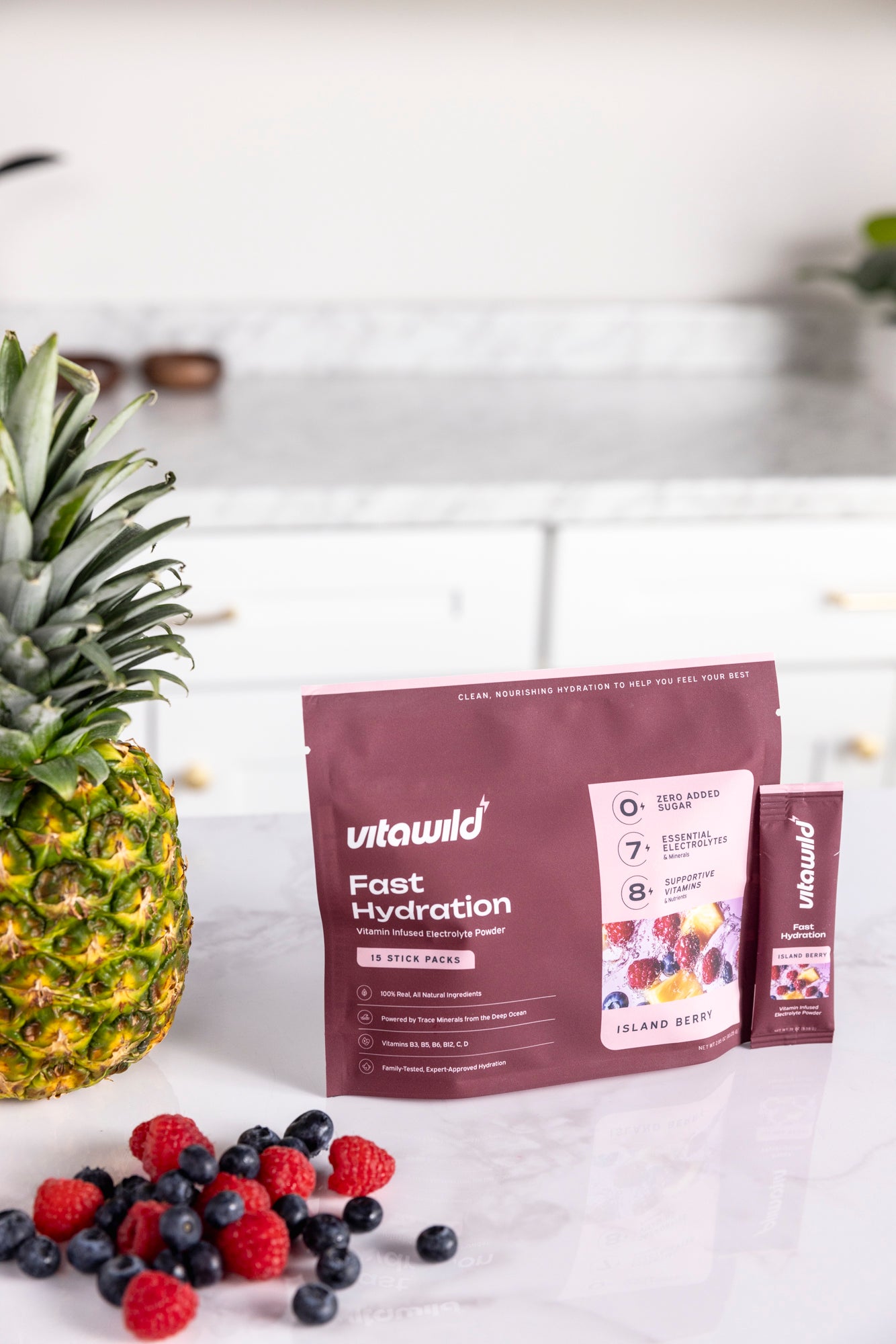
VitaWild's electrolyte mix delivers 80mg of magnesium from magnesium citrate and the trace mineral complex, plus 800mg of potassium citrate, in a single evening serving — the specific combination that addresses both muscle relaxation and nerve signal stability. Both are in citrate form, so you're absorbing what's on the label. In water, the minerals are in ionic form, which many people find easier on the stomach than capsules. No added sugar, no artificial ingredients — plus ConcenTrace trace minerals. It comes in Lemonade, Island Berry, and Watermelon stick packs.
A practical approach: mix one VitaWild serving into 12–16 ounces of water about an hour before bed. If symptoms are severe, ask your doctor to run a ferritin panel at the same time — addressing the magnesium/potassium side and the iron side together gives you a more complete picture. Don't adjust existing medications without talking to your prescriber first.
Restless legs is a real and disruptive condition — and for too long it's been either dismissed or jumped straight to prescription-level intervention without addressing the nutritional variables first. Mineral deficiency is one of the more fixable contributors, and the citrate forms of magnesium and potassium are where the evidence most consistently points.
Give the combination a genuine trial of two to three weeks. Results vary from person to person, and if symptoms persist or worsen, working with a doctor is the right next step. But for a lot of people, what's standing between them and a decent night's sleep is a mineral gap — not a prescription.
Ready to feel the difference?
Try VitaWild — Save 55% TodayFree shipping · 90-day money-back guarantee · Cancel anytime


