

Hydration Journal
Pickleball Hydration: What You Need for All-Day Court Time

Edited October 5, 2026
You're two and a half hours into a round-robin tournament, third game of the day, and your left calf just seized up mid-shuffle step. Not a dramatic collapse — just that dull, tightening vice grip that tells you the next lateral lunge is going to hurt. You grab your water bottle, take a long pull, and wonder why you feel this way after a sport your nephew describes as "basically ping-pong but slower."
Here's the thing: pickleball is not basically ping-pong but slower. Your body doesn't know it has a reputation for being low-impact. It only knows you've been exploding out of a ready stance, chopping sideways, sprinting to the kitchen line, and doing it again every 30 seconds for three hours in July. And it's been sweating the whole time whether you noticed or not.
The Sport That Fools You
Pickleball looks casual from the sideline. The court is smaller than a tennis court, the ball moves slower, and the social vibe — the banter, the post-game coffee, the matching visors — doesn't exactly scream "elite athletics." But the movement pattern inside that 20-by-44-foot box is relentlessly demanding.
Every point is a series of rapid direction changes. You pivot from baseline to kitchen, recover sideways, reset your feet, and do it again. Doubles stretches this out even further — you're not covering as much court per person, but you're playing continuously, chatting between points, and easily tacking on another game before anyone agrees to stop. Three hours of that is a lot of stop-start muscular effort, and stop-start is actually harder on your body than steady-state movement. Distance runners maintain a rhythm; pickleball players interrupt theirs constantly.
The metabolic demand shows up in your sweat rate. On a warm outdoor court — and most outdoor pickleball is played from April through October — recreational players lose somewhere between 24 and 47 fluid ounces per hour depending on temperature, humidity, and their individual physiology. That's well over a pound of fluid in a single hour of play. Most people don't replenish anywhere close to that.
The Sweat Problem No One Talks About
Outdoor pickleball courts absorb and reflect heat in ways that sneak up on you. Asphalt and concrete hold warmth through the afternoon. You're not running under shade. And the competitive social structure of a round-robin or open play format means you rotate from court to court without long enough breaks to notice how parched you're getting.
This matters more when your baseline cardiovascular fitness isn't what it was at 30. Pickleball's player base skews significantly older than most racket sports — the average recreational player is in their mid-50s. That's not a knock on the sport; it's part of what makes it wonderful. But it does mean that a significant portion of pickleball players are exercising at intensities they haven't maintained in years, sometimes in heat they haven't trained in at all.
After 40, your thirst signal becomes a less reliable indicator of your hydration status. By the time you feel thirsty during outdoor exercise, you may already be 1 to 2 percent dehydrated — a deficit that measurably reduces reaction time and decision-making speed. At the kitchen line, that's the difference between a put-away and a ball off your paddle frame.
Why Cramps Hit Pickleball Players Specifically
There's a cleaner way to hydrate.
Try VitaWild — Save 55% TodayFree shipping · 90-day money-back guarantee · Cancel anytime
Not all exercise cramps are the same. Running cramps tend to involve the hamstrings and quads after sustained forward effort. Pickleball cramps have a different address — the calves, the hip flexors, the arches of the feet. These are the muscles doing the lateral cutting, the quick drop-step, the weight transfer as you reach for a low dink.
The conventional wisdom is that cramps mean you need salt. Sodium is part of the picture, but for lateral-movement sports, magnesium and potassium are doing a lot of the heavy lifting. Magnesium plays a direct role in muscle relaxation — it's what allows a contracted muscle to release. When magnesium runs low during extended play, muscles stay in a semi-contracted state longer than they should, and the involuntary cramping that follows is the body's way of announcing that. Potassium governs the electrical signal that triggers and terminates muscle contractions. Deplete it, and the signal gets noisy.
Both minerals leave the body through sweat, and both are depleted faster by the kind of short-burst, high-frequency muscle contractions that define pickleball movement. Drinking plain water during a long session actually dilutes what little of these minerals is left, which is why the third-game cramp is so common — and why it rarely shows up in the first.
Timing Your Hydration Like It Actually Matters
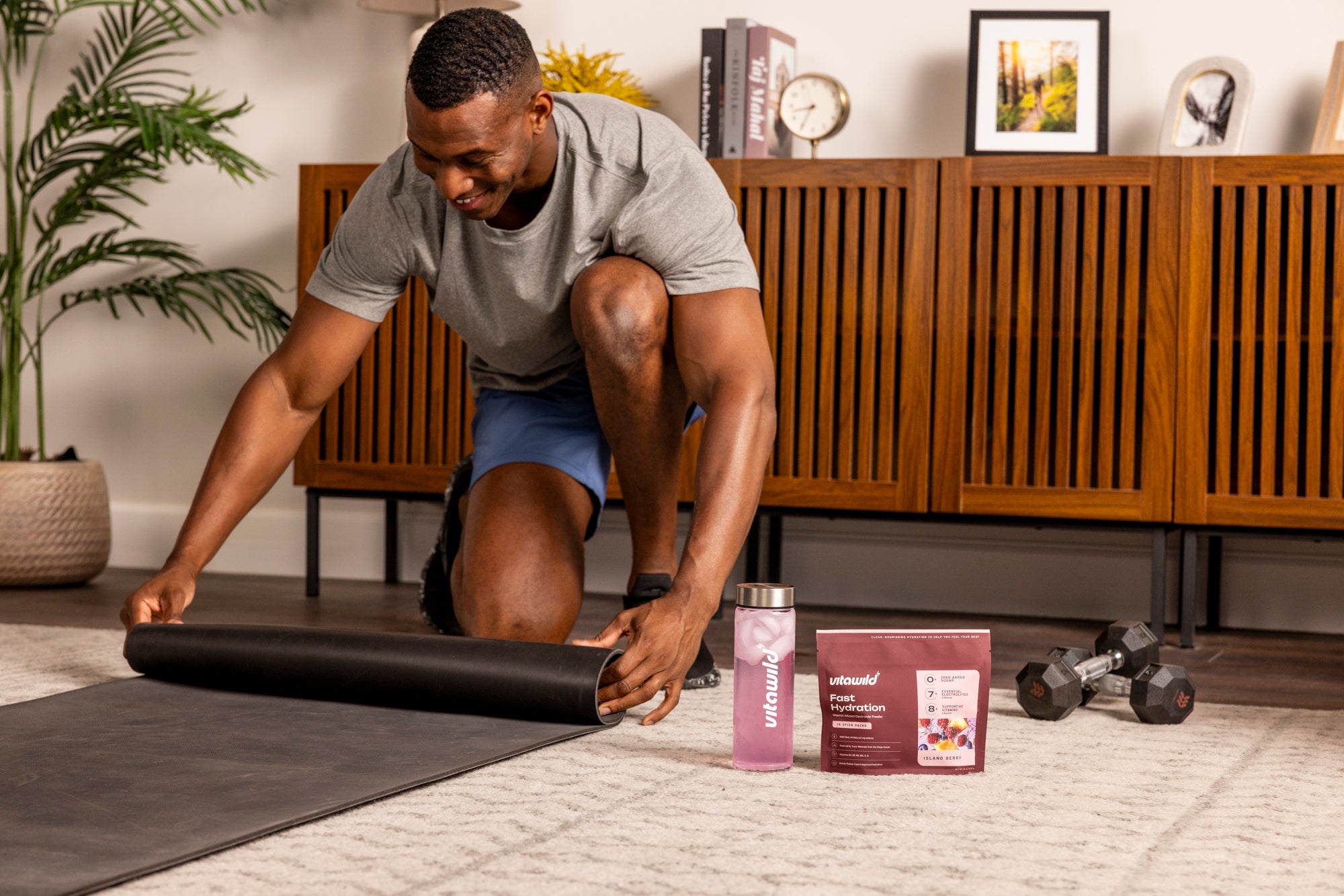
Most pickleball players drink when they think about it. That works for an hour of casual doubles on a 68-degree day. It doesn't hold up for three hours of competitive open play in August.
A protocol that holds up looks like this:
Before your first game: Drink 16 ounces about 60 to 90 minutes before you start. This gives your kidneys time to balance things out and means you begin play already topped off rather than catching up. Waiting until you arrive at the courts puts you a point behind before the first serve.
During play: Aim for 6 to 8 ounces every 15 to 20 minutes — a few sips every time you switch sides or break between games. Most pickleball transitions give you 90 seconds. Use them.
After your last match: Replenish within 30 minutes of finishing. Your muscles are still trying to restore mineral balance, and what you put in during this window absorbs more efficiently than the glass of water you drink two hours later at dinner.
A word on what not to drink: alcohol the night before a morning outdoor session may leave you starting the day mildly dehydrated — it suppresses the hormone that tells your kidneys to retain fluid. Coffee is fine for focus but don't count it as hydration. And sugary sports drinks — the neon kind in 32-ounce cups — will spike your blood sugar early in the match and drop it hard by game three.
Reading Your Body on Court
Your body sends signals before a cramp announces itself. A mild headache during play, especially in the afternoon heat, is often early dehydration before you feel thirsty. Muscle twitching — small, involuntary flickers in your calves or quads — is a more specific warning that electrolyte levels are dropping. Urine color is the most reliable long-game indicator: pale yellow is where you want to be, dark amber means you're already behind.
One that surprises people: shot accuracy that crumbles in the third game isn't always fatigue. Cognitive function is closely tied to hydration. The concentration needed for a soft dink, the spatial awareness to cover the line — both degrade faster than most recreational athletes expect. If you're framing balls you'd normally put away cleanly, drink something before you blame your backhand.
Most pickleball players hydrate the way they did in their 20s — plain water, maybe a Gatorade if they remember to grab one at the convenience store on the way to the courts. That was probably fine when they were younger and playing 45 minutes of recreational tennis. Three hours of doubles in July is a different equation entirely, with a different body doing the math.
What Actually Works for All-Day Court Sessions
Water is still the foundation. Nothing replaces it, and no electrolyte product works properly without adequate water as the carrier. But after 60 minutes of outdoor play — and almost always beyond 90 — water alone is not enough to maintain the mineral balance your muscles need to keep firing cleanly.
When you're evaluating what to add to your water, three things matter most for pickleball specifically:
Potassium. Most mainstream sports drinks either skip it entirely or include token amounts. Potassium citrate — the form your body absorbs most readily — is what governs muscle contraction timing. The cramps pickleball players complain about in their calves and feet are almost always partly a potassium story.
Magnesium. Lateral movement places a specific and repeated demand on the muscles responsible for cutting and planting. Magnesium citrate is the form with the best absorption, and it's the mineral most directly involved in letting those muscles release between contractions.
No added sugar. A mid-match sugar crash is real and miserable. You don't need the energy spike — you need sustained mineral support.
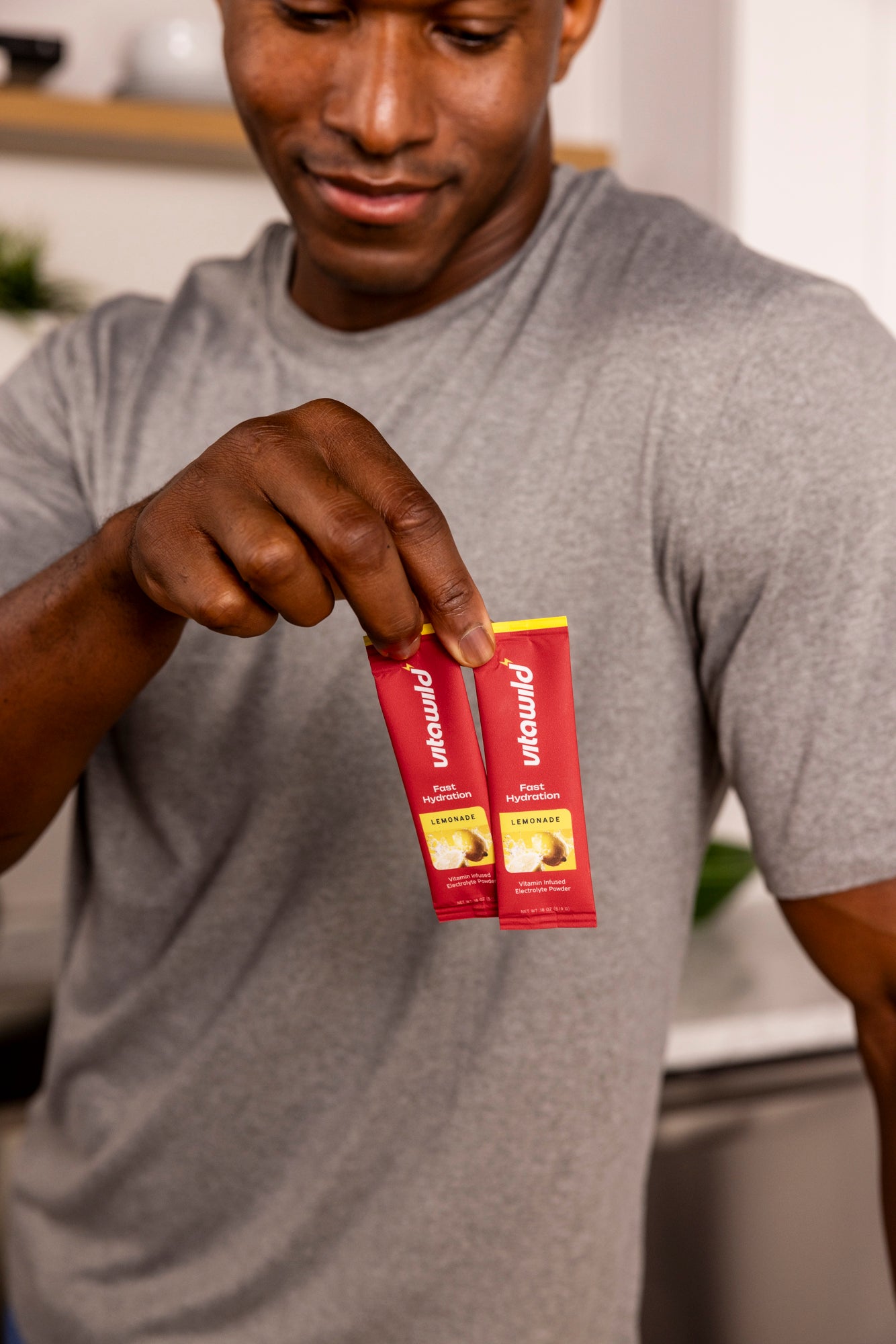
VitaWild delivers 800mg of potassium citrate and 80mg of magnesium from magnesium citrate and the trace mineral complex in a single stick pack — specifically the two minerals responsible for the cramps pickleball players complain about most. It also carries 450mg of sodium, 80mg of calcium, zinc, and 84+ trace minerals, totaling 7 essential electrolytes with 0g added sugar, no artificial colors, and no artificial flavors. The stick packs drop into any paddle bag without taking up space. Mix one in 16 ounces of water before your first game, another in the 30 minutes after your last.
A few alternatives worth knowing: Nuun tablets are a convenient tablet format with a lower overall mineral count — fine for shorter sessions. Coconut water is a natural option that does carry potassium, though the amount varies by brand and batch. LMNT is a high-sodium electrolyte popular with endurance athletes, though its mineral balance skews toward sodium over the potassium and magnesium that pickleball movement specifically demands.
VitaWild comes in Lemonade, Island Berry, and Watermelon — so you're not drinking something that tastes like a hospital waiting room while you're trying to enjoy a Tuesday morning doubles session.
Pickleball is one of the few sports where the social pull genuinely keeps you on the court longer than you planned. Someone suggests one more game, a friend challenges the score from the last set, and suddenly it's been three hours and you're squinting into a 2pm sun. That's actually one of the best things about the sport — it doesn't feel like exercise until it does. Your hydration strategy just needs to keep pace with that reality, starting well before the first serve and lasting through the last handshake at the net.
Ready to feel the difference?
Try VitaWild — Save 55% TodayFree shipping · 90-day money-back guarantee · Cancel anytime


