

Hydration Journal
What's Really in Your Child's Sports Drink (A Parent's Label Guide)

It's 91 degrees on the sideline, your kid just sprinted off the field for a water break, and the snack bar is selling Gatorade for a dollar. Of course you say yes. They're sweaty, they played hard, it's a sports drink — that's literally what it's for. You hand over the cash and don't think twice about it.
Most parents have been in that exact moment. And most parents, if they read the label later that afternoon, have had a version of the same quiet surprise. Twenty-one grams of sugar. Red 40. Yellow 5. Ingredients that seem more at home in a gas station candy aisle than in something marketed to kids who just ran around for an hour.
This isn't a lecture about that moment. You didn't do anything wrong. But if you want to understand what's actually in those bottles — and what to reach for instead — here's the honest breakdown.
Why Sports Drinks Were Invented (And Who They Were Actually For)
In 1965, a University of Florida kidney disease researcher named Robert Cade was asked to figure out why the Gators football players were wilting in the brutal Florida heat. His answer was a formulated drink with water, sodium, sugar, and potassium — designed to replace what 200-pound men were losing through hours of extreme exertion in sweltering conditions. Those players were burning upward of 5,000 calories per practice, under full pads, in August heat.
That's what Gatorade was built for. It was not built for an 8-year-old playing 22 minutes of recreational soccer on a Saturday morning. The formula hasn't changed much since Cade's original version, but the marketing expanded dramatically to include children, casual athletes, and anyone who sweats occasionally. The product stayed the same. The audience got much wider.
What's Actually on the Label
A standard 12-ounce bottle of original Gatorade contains 21 grams of sugar — about the equivalent of five teaspoons. It also contains FD&C Red 40, Yellow 5, and artificial flavors. Powerade follows a similar pattern: 21 grams of sugar, Blue 1, artificial flavors.
Red 40 is the one worth pausing on. It's derived from petroleum distillates, and while the FDA still considers it safe in general use, the EU has required a warning label on any product containing it since 2010: "May have an adverse effect on activity and attention in children." Multiple peer-reviewed studies, including a widely cited 2007 study published in The Lancet, found a statistically significant link between artificial food dyes — including Red 40 — and increased hyperactivity in children. That's not a fringe claim. It's the reason an entire continent labels their products with a caution note.
The lower-calorie versions aren't a clean swap either. Gatorade G2 drops to 7 grams of sugar but adds sucralose and still contains artificial dyes. The sugar went down; the artificial ingredients didn't.
The Sports Marketing Problem
There's a cleaner way to hydrate.
Try VitaWild — Save 55% TodayFree shipping · 90-day money-back guarantee · Cancel anytime
The "sports drink" label does a lot of heavy lifting. It implies necessity — that your child needs this to perform, to hydrate, to recover. But the research on kids and sports drinks tells a more complicated story.
The American Academy of Pediatrics has specifically noted that sports drinks are rarely necessary for children and adolescents, and that routine consumption adds unnecessary sugar and calories. For kids doing light to moderate activity, plain water handles hydration just fine.
A child playing 20 minutes of recreational soccer on a mild afternoon is burning somewhere between 150 and 250 calories. Handing them 21 grams of sugar — 84 calories of pure glucose — isn't replacing what they burned. It's a sugar spike their body now has to manage. For adult athletes burning thousands of calories in sustained activity, fast glucose is useful fuel. For most kids in most youth sports situations, it just means a blood sugar spike followed by a crash — more irritable, less focused, harder to settle after the game. The drink meant to help performance can actually work against it.
When Kids Actually Do Need Electrolytes
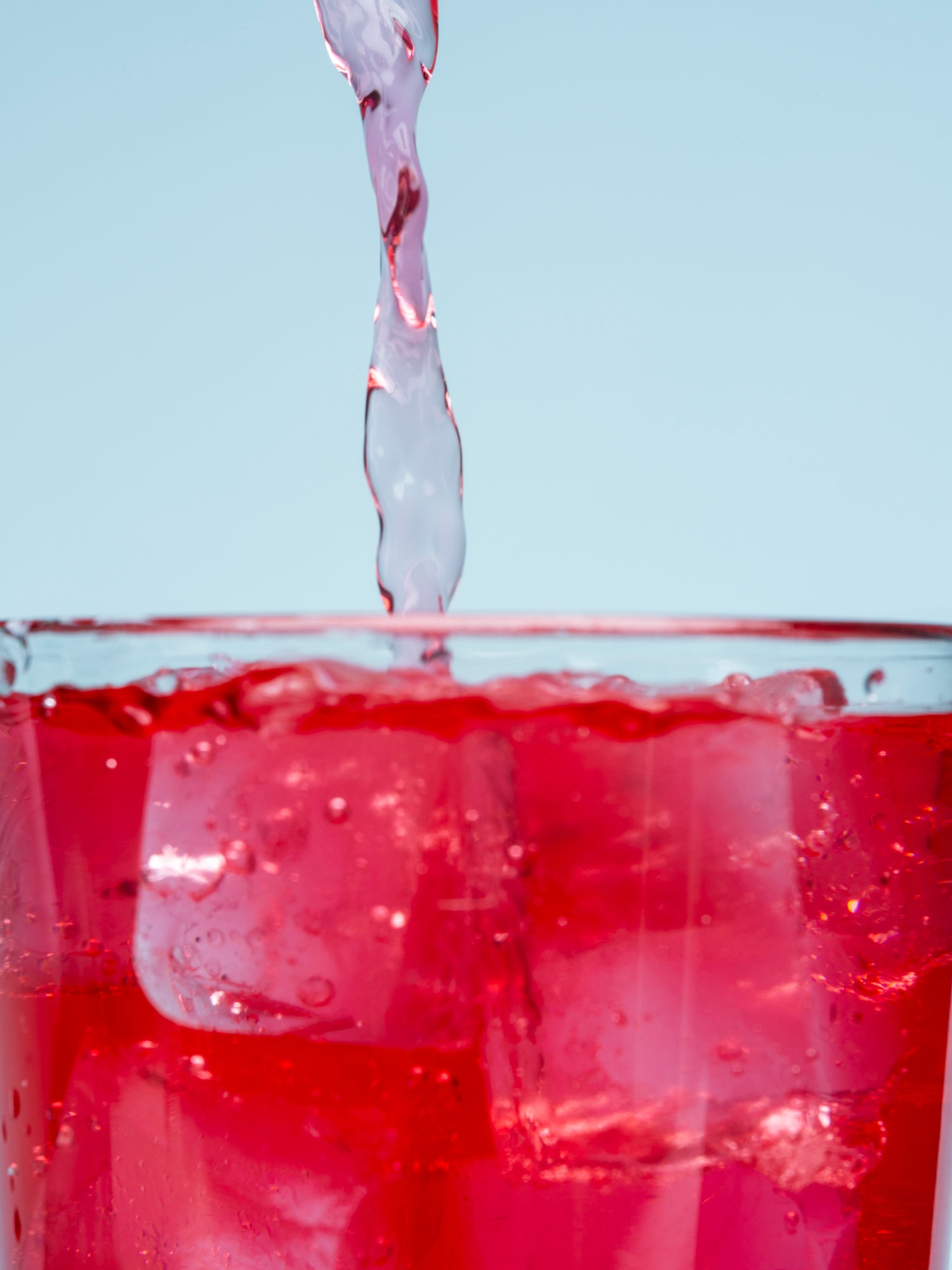
That said, there are real situations where water alone isn't the right call. Kids genuinely benefit from electrolyte replacement after 60 or more minutes of vigorous activity in heat, during or after illness involving vomiting or diarrhea (where sodium and potassium losses can be significant), and on very hot days with sustained outdoor activity like a long beach afternoon or a full day at an outdoor camp.
In these situations, electrolytes matter. The question isn't whether to replace them — it's what you're using to do it.
What to Look For on the Label
If you're going to reach for something beyond water, here's the short version of what to check:
Artificial dyes. Look for "FD&C" followed by a color name (Red 40, Yellow 5, Blue 1) or the term "artificial color." These aren't necessary for hydration, and for children with sensitivity, they may cause behavioral effects.
Added sugar. Under 5 grams is a reasonable target for kids. Twenty-one grams is a lot of sugar for any child, regardless of how active they were.
Artificial sweeteners. Sucralose, sorbitol, and acesulfame potassium show up in "low sugar" versions of major brands and can cause GI distress in children, particularly when consumed in higher amounts.
Real electrolytes. At minimum, you want sodium and potassium — they're the two primary electrolytes lost in sweat. If those numbers aren't on the label, you're mostly buying flavored water.
The Better Options That Already Exist
The good news is that the market has shifted. There are genuinely cleaner options available now, and it's worth acknowledging them.
Pedialyte Sport is more electrolyte-focused than standard sports drinks, with around 6 grams of sugar and a formula built for real rehydration. A reasonable option, particularly after illness.
Nuun Kids: 1 gram of sugar, natural colors, tablet format. A low-sugar, low-fuss choice.
Liquid IV Kids: 6 grams of sugar, no artificial dyes — fair, and widely available.
Coconut water: naturally occurring sugars (about 9g), decent potassium, no formulation required. Many parents reach for it without a second thought.
For most situations — cold water and a salty snack (crackers, pretzels, a pinch of salt on some watermelon) genuinely works. For kids who just did a normal amount of normal activity, that's the whole protocol.
Most parents aren't looking for a lecture at the snack bar. They just want something clean that their kid will actually drink. The good news: the options have gotten much better in the last few years.
The Sports Drink Checklist for Parents
When you're evaluating any kids' hydration product — at the store, in the snack bar cooler, or on a website — here's the quick read:
- 0g added sugar (or close to it) — not just "low sugar" marketing language
- No FD&C dyes — no Red 40, no Yellow 5, no Blue 1, no "artificial color" anywhere on the label
- No artificial flavors or preservatives
- Real electrolytes listed with amounts — sodium and potassium at minimum
- Non-GMO or clean-label certification if that matters to your family
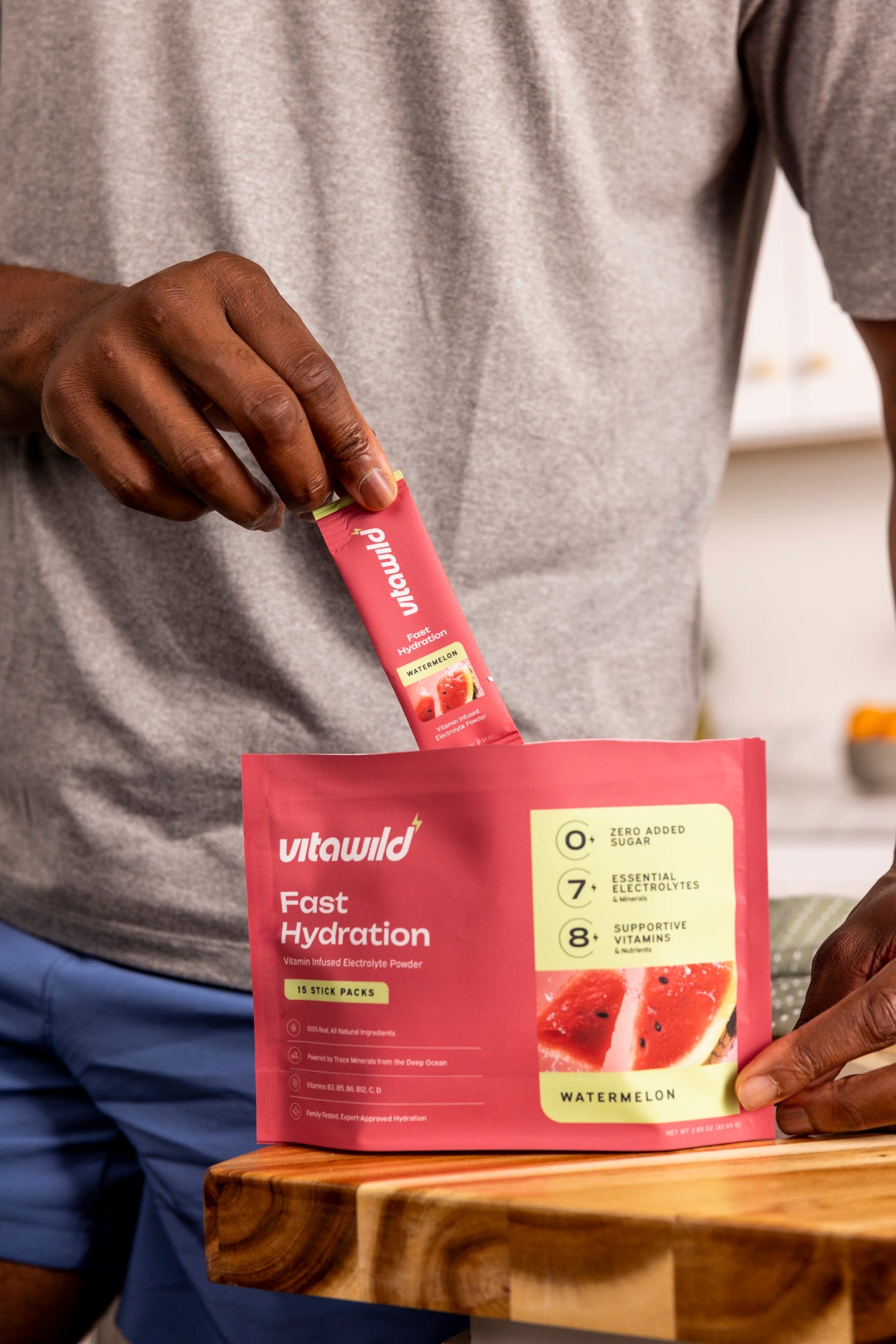
VitaWild hits every item on that list. Zero grams of added sugar, no artificial dyes of any kind, no artificial flavors, no artificial preservatives. The electrolyte profile is built for real activity: 800mg of potassium and 450mg of sodium per serving — genuine post-practice numbers, not a token amount added for marketing. Non-GMO and formulated to be safe for both kids and adults.
The stick pack format is useful for parents: a full stick for an adult after a hard workout, half a stick for a younger child who needs something lighter. Watermelon and Lemonade are the kid-tested favorites; Island Berry is a solid pick if your household has strong opinions about flavors.
Nuun Kids remains a solid choice for the tablet format and ultra-low sugar profile. Coconut water is still a reasonable natural option. And plain cold water is the right answer for most kids after normal activity — VitaWild is for the days that call for something more.
You don't have to be the parent who says no at the snack bar. That dollar Gatorade at a soccer game isn't going to derail anyone's health. But there's a difference between a one-off and a habit — and a difference between knowing what's in something and just assuming it's fine because it says "sport" on the label. Know what you're saying yes to. And on the days when your kid has genuinely pushed hard in the heat, have the better option ready.
Ready to feel the difference?
Try VitaWild — Save 55% TodayFree shipping · 90-day money-back guarantee · Cancel anytime


