

Hydration Journal
Hiking with Kids: A Parent's Guide to Happy Trails

Edited October 5, 2026
You are exactly 2.7 miles from the trailhead. There is no shortcut back. And your six-year-old, who was completely fine eleven minutes ago, has just sat down on a root and announced that their legs "don't work anymore." You say something calm, something encouraging. You offer a Goldfish cracker. You look at the sky. You think about all the people on social media who make this look effortless, with their matching REI vests and their kids who apparently skip up mountains while narrating the local bird species.
This is real family hiking. It doesn't always look like the photo. But it can absolutely feel worth it — and with the right setup, more hikes end with "can we do that again?" than with someone being carried back to the parking lot. Here's what actually helps.
Pick a Trail That Gives Kids a Fighting Chance
The most common mistake parents make is choosing a trail based on what sounds manageable to an adult. Three miles feels like nothing to you. To a five-year-old, three miles is a significant life event.
A good rule of thumb: plan for roughly one mile of trail per year of age, maximum, and even that is generous on a hot day or if the terrain is rough. A seven-year-old can probably handle four miles on a flat, well-shaded trail — but put that same kid on a rocky exposed ridge and two miles will feel like punishment.
Beyond distance, look for trails that give kids something to look at. A waterfall destination, a stream crossing, a big boulder they can climb — these become the landmark goals that keep small legs moving. "We're almost at the bridge" lands very differently than "we're almost done." Kid brains run on anticipation, not mileage markers.
Build a Snack Strategy, Not Just a Snack Bag
Regular snacks are what you eat at a picnic table. Hike snacks are what keep the peace when someone is two miles from the car and running low on goodwill.
The difference is mostly in timing and composition. On a trail, you want to eat before anyone asks to eat. Every 30 to 45 minutes, stop, sit, eat something. Don't wait for hunger — by the time a tired kid tells you they're hungry, you're already behind.
For what to pack: dense, calorie-rich foods that hold up in a warm daypack. Trail mix, nut butter packets, whole-grain crackers, jerky, dried mango, a banana wrapped in a cloth. Skip anything with chocolate coating (hello, melted mess inside a Ziploc at noon in July) and anything too sweet without substance. Energy crashes on a trail are a very real, very unpleasant experience for everyone involved.
The Right Shoes Make or Break the Whole Day
Buy cheap shoes for plenty of things. Hiking is not one of them.
A $14 pair of canvas sneakers from a discount bin will have your kid sliding on every wet root, blistering by mile one, and complaining — correctly — that their feet hurt. Trail shoes for kids don't need to be expensive, but they need ankle support, a grippy sole, and a proper fit with enough toe room for downhill descents. Merrell and Keen both make durable kids' hiking shoes in the $45–$75 range that will outlast multiple seasons.
Socks matter too. A thick wool or synthetic hiking sock prevents blisters better than anything else you can do. Skip the cotton.
Keep the Trail Interesting
Kids don't hike for the cardiovascular benefits. They need a reason to keep going that makes sense to a seven-year-old brain.
A simple nature scavenger hunt printed on a notecard can transform a mundane stretch of trail into a mission: find something smooth, something rough, something that smells interesting, something that flew. Letting kids lead a section of trail gives them ownership. The "just to that tree" technique — picking a visible landmark and making it the only goal — breaks a long stretch into pieces that feel achievable.
Stop when something genuinely interesting appears. A weird mushroom, a big spider web, the sound of water somewhere off-trail. These pauses feel like delays to you and like the whole point to them.
Pace Like a Kid, Not Like a Hiker
Adults hike in a fairly steady rhythm. Kids hike in bursts — sprint, stop, repeat. Fighting this is exhausting for everyone.
Plan your pace around frequent short breaks rather than one long rest at a midpoint. Ten minutes of moving, three minutes of standing on a log and throwing pinecones into a creek, is often more effective than trying to maintain consistent forward progress. Let the rest stops be genuine rest stops: sit, snack, look around, don't check your watch.
The Turnaround Rule
Turn back before they say they're done. This is the single most important tactical piece of hiking with kids, and almost every parent learns it the hard way.
If your child seems tired at mile two, that is the exact moment to turn around — not when they're depleted and the trail back feels impossible. A hike that ends on a high note, where they had fun and still had something left in the tank, is a hike they'll want to repeat. A hike that ends in a meltdown with someone crying all the way back to the Subaru is a hike that poisons the next three invitations.
Safety Basics That Actually Matter
Always tell someone your plan before you leave: which trail, roughly when you expect to be back. Download the trail map offline before you go — AllTrails works well for this — because cell service on even relatively popular local trails is unreliable. Pack a small whistle for each kid and explain the rule: three blasts means you need help, you hear three blasts and you answer back.
A basic first aid kit, a mylar emergency blanket, and a fully charged phone take up almost no space and matter a great deal if something goes sideways.
Hydration Timing
Kids dehydrate faster than adults, and they're much worse at noticing it. Their bodies generate more heat relative to their size, they're often moving hard when they should be pacing, and they don't have the internal cue that says "drink something." By the time a child tells you they're thirsty on a trail, they've usually been under-hydrated for a while.
The fix is scheduled drinking, not drinking on demand. Offer water at every snack break, every rest stop. Make it part of the routine, not a response to complaints. Set a reminder on your phone if you need to.
Getting Kids to Actually Drink on the Trail
There's a cleaner way to hydrate.
Try VitaWild — Save 55% TodayFree shipping · 90-day money-back guarantee · Cancel anytime
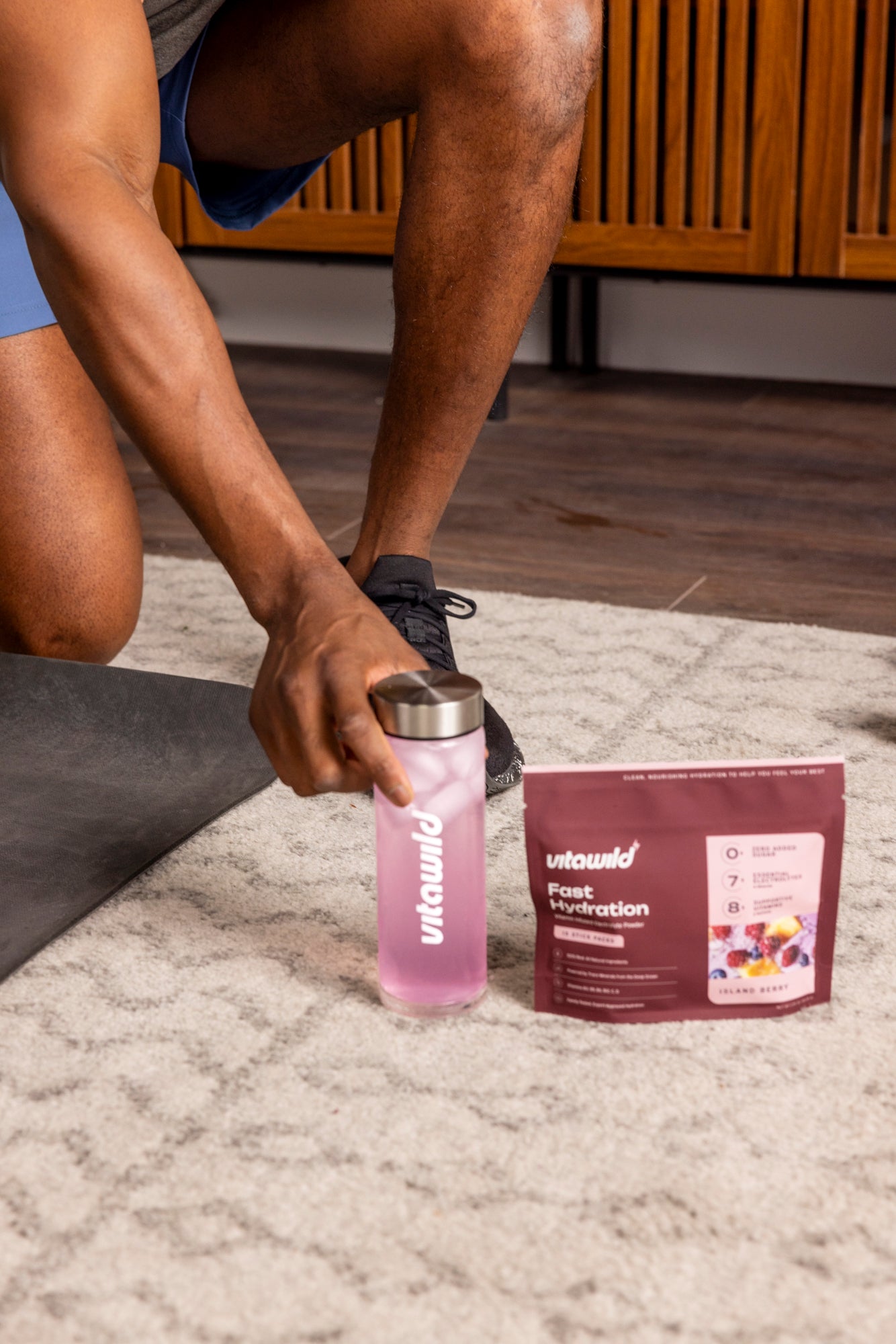
Even with the best intentions, water intake on the trail is a battle many parents quietly lose. The water is lukewarm. The kid isn't thirsty. There's a more interesting rock right there. Getting fluids in requires a little more than just having a bottle handy.
Temperature matters more than you'd think. An insulated bottle that keeps water cold for several hours — a Hydro Flask or a Nalgene Oasis-style bottle works well — makes a genuine difference in how willingly kids drink. Cold water on a warm trail is appealing. Tepid water from a clear plastic bottle that's been baking in a mesh pocket for two hours is not.
Flavor also matters. Kids drink more when their water is interesting, and the obstacle is that most flavored options aimed at kids are loaded with sugar and artificial dyes. You don't want your kid running on a sugar spike on a trail miles from the car.
This is where VitaWild comes in. Mix a stick pack of VitaWild into their water bottle before you leave the trailhead — Watermelon and Lemonade are both genuine hits with kids — and suddenly the water is something they actually reach for. There's 0g of added sugar, no artificial colors or flavors, and the electrolyte profile is built for real activity: 450mg sodium, 800mg potassium, 80mg magnesium, and 80mg calcium per serving. When kids sweat, they lose those electrolytes, and plain water alone doesn't replace them. One stick in a 20-ounce bottle can be the difference between a kid who powers through mile three and a kid who sits down on a root and declares their legs broken.
VitaWild stick packs are easy to toss a few of into the top pocket of a daypack and forget about until you need them. Parents can use them too — same product, same clean formula, and the endurance support from the 84+ trace minerals and Coconut Water Powder is useful for adults who are simultaneously hiking and managing the logistics of hiking with children, which is its own cardio workout.
Other tricks worth layering in: frozen chunks of watermelon or strawberry in a small insulated container that doubles as a water bottle (the fruit thaws slowly and adds a little natural sweetness), or simply calling whatever they're drinking the "trail drink" — which is different from regular water and therefore interesting. Small kids respond to narrative. Give the drink a name and half the battle is won.
The best hike with kids isn't the longest or the most scenic. It's the one where, on the drive home, someone in the backseat says "can we do that one again?"
There's something real that happens on a trail — no screens, no schedule, just trees and effort and the specific smell of sun on pine needles. Kids feel it even when they're complaining. You can see it in how they sleep that night. Getting outside, even imperfectly, even with someone crying briefly near mile 1.4, is almost always worth it. Plan the next one before the car is back in the driveway.
Ready to feel the difference?
Try VitaWild — Save 55% TodayFree shipping · 90-day money-back guarantee · Cancel anytime


