

Hydration Journal
GLP-1 Medications and Hydration: What You Need to Know

Edited October 5, 2026
You're three months into Ozempic or Wegovy. The scale is moving, your clothes are fitting differently, and by most measures things are going well. But somewhere around midday you start to drag — head feels heavy, thoughts come slowly, and there's a dull ache behind your eyes you keep chalking up to the medication adjusting. You're drinking water. You're doing what you're supposed to do. So why do you feel like this?
The answer probably isn't the medication. It's dehydration — and the reason it's happening without you realizing it is more specific than most people on GLP-1s ever get told.
Why GLP-1s and Dehydration Go Hand in Hand
GLP-1 medications — semaglutide (Ozempic, Wegovy), tirzepatide (Mounjaro, Zepbound) — work by mimicking glucagon-like peptide-1, a hormone your gut releases after eating. They bind to GLP-1 receptors to suppress appetite hormones, slow gastric emptying, and regulate blood sugar. The result is a meaningful reduction in hunger and caloric intake.
What the prescription information rarely highlights is that GLP-1 receptors are also present in the brain regions that regulate thirst. These medications may suppress your thirst signal at the same time they suppress your hunger — leaving you less hungry and less thirsty even when your body genuinely needs fluid.
Thirst is your primary feedback system for hydration. When it goes quiet, you have to rely on discipline and scheduling. Most people don't — they drink when they notice they're thirsty, and on GLP-1s that cue doesn't show up reliably.
The Food-Water Connection You're Missing
Roughly 20 to 30 percent of your daily hydration normally comes from food. Fruits, vegetables, soups, yogurt — they all carry significant water content. A cup of cucumber slices is about 95 percent water by weight.
When GLP-1 medications bring your appetite down to 1,000 to 1,400 calories a day — common in the early months — you're not just eating less food. You're losing a meaningful source of daily fluid. If you were getting 600ml of water from food and you've cut that by half, that gap doesn't close on its own. You have to drink more to compensate, at the exact moment your thirst signal is telling you that you don't need to.
Electrolytes Are Leaving Faster Than You Think
Fluid loss is only part of the picture. For many people on GLP-1s, electrolyte depletion is the more pressing issue — and it comes from multiple directions at once.
Rapid weight loss accelerates the excretion of potassium, magnesium, and sodium through urine. Lower caloric intake means fewer of those minerals coming in through food. And the common GI side effects of GLP-1 medications — nausea, vomiting, loose stools — accelerate losses further through direct excretion.
Potassium and magnesium tend to drop fastest. Potassium is involved in fluid balance, muscle contraction, and nerve signaling — low levels can produce muscle cramps, fatigue, and heart rhythm changes. Magnesium supports over 300 enzymatic processes in the body, and a drop often shows up as difficulty sleeping, muscle twitching, or a low-grade mental flatness that's easy to misread as something else.
Symptoms People Blame on the Medication
There's a cleaner way to hydrate.
Try VitaWild — Save 55% TodayFree shipping · 90-day money-back guarantee · Cancel anytime
GLP-1-related dehydration symptoms — fatigue, headaches, muscle cramps, brain fog, dizziness on standing — look almost identical to the adjustment symptoms the medications can cause on their own. Many people assume it's the medication doing its thing, wait it out, and never address what's actually happening.
If you're weeks or months in and still experiencing these symptoms consistently, dehydration and electrolyte imbalance deserve investigation. Your prescribing provider can run bloodwork to check potassium, magnesium, and sodium levels and give you a clearer picture.
The Bone and Muscle Issue
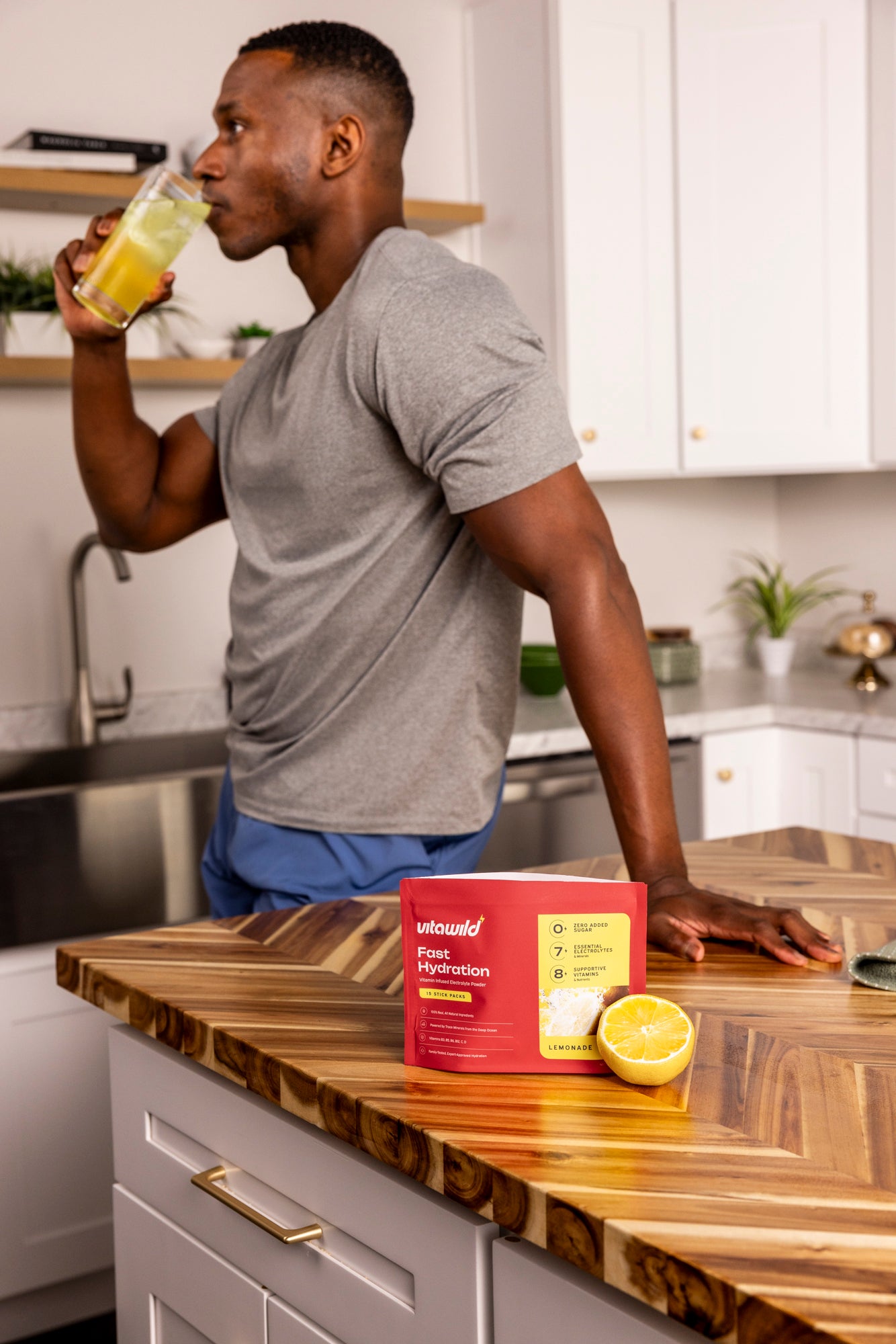
There's a longer-term concern that matters specifically for people losing weight quickly on GLP-1 medications: bone density.
Rapid weight loss — regardless of how it happens — can accelerate bone loss if it's not supported by adequate nutrition. Vitamin D, calcium, and magnesium all play roles in maintaining bone density. Vitamin D is often already low in adults who haven't been supplementing, and reduced food intake makes it harder to get from diet alone. Magnesium is needed for the conversion of Vitamin D into its active form, so the two work together in ways that matter when you're losing weight at speed.
Muscle loss is a related concern. Without intentional protein intake and resistance training, some of the weight lost on GLP-1 medications can come from lean mass. Adequate hydration and micronutrient support may help preserve muscle function, though neither replaces protein and exercise.
A Practical Hydration Protocol
If you're on a GLP-1 medication, here's a straightforward approach to staying ahead of dehydration:
Set timed reminders, not thirst-based ones. Your thirst signal may not be reliable, so use your phone. A reminder every 60 to 90 minutes to drink 8 ounces is a workable structure.
Aim for 2 to 3 liters of total daily fluid. This accounts for both the reduced water from food and electrolyte losses in the background — it's more than most people think they need.
Track your intake for at least a week. Most people are surprised by how far short they fall. A simple tally changes behavior more than intention alone.
Avoid alcohol while adjusting. Alcohol is a diuretic and amplifies the dehydration risk already elevated on GLP-1s. It also interacts unpredictably with slowed gastric emptying, so even small amounts hit harder.
Skip high-sugar drinks. Sodas and sweetened sports drinks can spike blood sugar in ways that work directly against the goals of GLP-1 therapy.
Finding the Right Electrolyte Supplement on GLP-1s
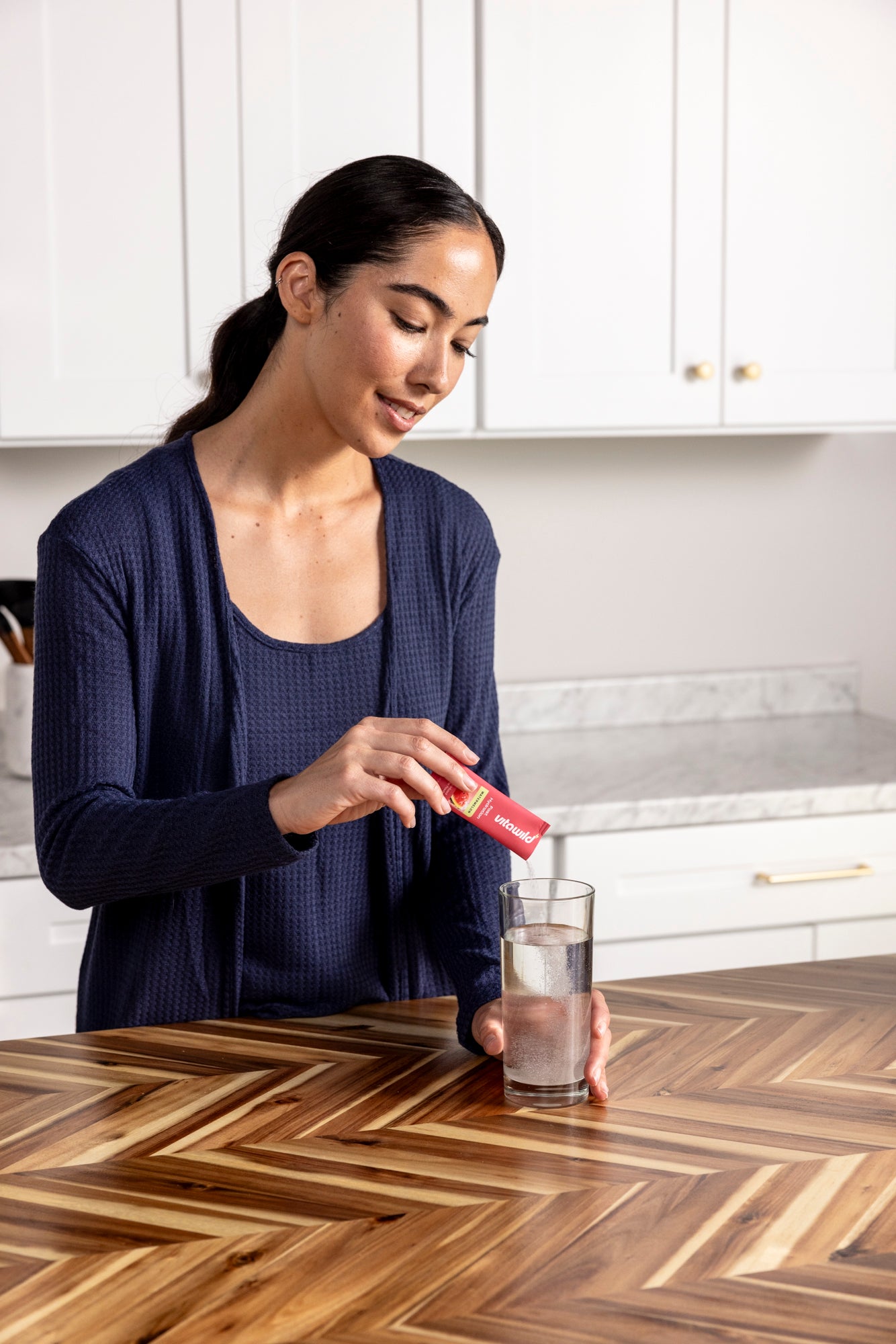
Most mainstream electrolyte products weren't designed with GLP-1 users in mind. Many contain significant added sugar — a problem when you're actively managing blood sugar and caloric intake. Others rely on artificial sweeteners that can trigger GI sensitivity, which is the last thing you want when nausea is already on the table. Finding something clean and nutritionally complete enough to address GLP-1-specific gaps is a narrower search than it sounds.
What to Look for in an Electrolyte Supplement on GLP-1s
A few things stand out as non-negotiable when you're vetting options.
Zero added sugar. This isn't optional for most GLP-1 users. If you're managing blood sugar, every gram of added sugar matters. A product that helps with electrolytes but adds 12 grams of sugar per serving is trading one problem for another.
Meaningful potassium — at least 700 to 800mg per serving. Potassium is the electrolyte most at risk during rapid weight loss and reduced food intake. A product with 75mg of potassium isn't doing much. You need something that can actually move the needle.
Vitamin D and magnesium together. Given the bone density concern specific to rapid weight loss, having these two in the same product matters. Magnesium supports Vitamin D absorption and activation, so separating them into different supplements misses the synergy.
No artificial sweeteners or colors. These aren't just cosmetic concerns — artificial sweeteners in particular can aggravate GI sensitivity in people who are already managing nausea on GLP-1s.
A few common options and where they land: Liquid IV contains added sugar, which makes it a poor fit for daily use on GLP-1 therapy. LMNT has no added sugar but is high in sodium and skips vitamins entirely — the Vitamin D and magnesium gap stays open. Plain coconut water has some natural potassium, but the amount varies by brand and the natural sugars add up quickly.
VitaWild is one of the few options that addresses multiple GLP-1-specific gaps at once. It contains 0g of added sugar, 800mg of potassium, 80mg of magnesium from magnesium citrate and the trace mineral complex, and 2,400 IU of Vitamin D — with D and magnesium paired intentionally, since magnesium supports the conversion of Vitamin D into its active form. The full formula covers 7 electrolytes, 8 supportive vitamins including a B-complex and 300mg of Vitamin C, and 84+ trace minerals, with nothing artificial anywhere in the formula. Stick packs (15 per pouch) make it easy to carry on busier days.
No single supplement replaces a full diet. But if you need an electrolyte option that addresses more than sodium replacement, it's worth comparing against what's already on your shelf.
The Bottom Line
GLP-1 medications are genuinely changing outcomes for millions of people managing their weight and metabolic health. That's not small. But dehydration is a real, underappreciated side effect of how these medications work — and it's one that's entirely manageable once you know to look for it.
Drink deliberately. Check your electrolytes. Pay attention to what your body is telling you even when the thirst signal isn't cooperating. The medication is doing its job. Make sure you're doing yours.
Ready to feel the difference?
Try VitaWild — Save 55% TodayFree shipping · 90-day money-back guarantee · Cancel anytime


