

Hydration Journal
Why Filtered Water Is Cleaner — and Why That's Actually a Problem

You did everything right. You bought the good filter — maybe a Berkey, a Brita, or a full reverse osmosis system under your sink — and now your water is genuinely, measurably cleaner. The chlorine is gone. The lead is gone. Whatever trace of PFAS was lurking in your municipal supply is gone. The water tastes better. You feel good about it.
Here's the part nobody mentions: clean water and complete water are not the same thing. Filtration is extraordinarily good at removing what you don't want. What it doesn't do is distinguish between a contaminant and a mineral your cells have relied on for millions of years. When some filtration systems strip the bad stuff, they strip everything — and that's a distinction worth understanding before you fill your next glass.
What's Actually in Unfiltered Water
Before water runs through a treatment plant or a home filter, it carries a complicated passenger list. Some of those passengers are genuinely dangerous: lead from aging pipes, chlorine added during treatment, industrial compounds like PFAS, pesticide runoff in agricultural areas. These are real concerns, and the case for filtering is solid.
But water also carries minerals — and has for as long as water has moved through the earth. As water percolates through rock and soil, it picks up calcium, magnesium, potassium, silica, manganese, zinc, selenium, and dozens more trace elements. These minerals dissolve into ionic form as water passes through its geological environment. Natural springs have been prized for centuries partly because of this mineral load. The idea that "spring water" is healthy isn't just folk wisdom — it reflects something real about what water accumulates on its way to the surface.
Before industrial water treatment, the mineral profile of your drinking water was largely determined by where you lived. Mountain communities drinking snowmelt runoff through granite got one mineral profile. Coastal communities pulling from limestone aquifers got another. The water was sometimes unsafe (waterborne illness was common), but it was never empty.
How Different Filtration Methods Handle Minerals
Not all filters are created equal, and the differences matter for mineral retention.
Brita and carbon filters work primarily by adsorption — activated carbon traps chlorine, some heavy metals, and organic contaminants. These filters are relatively gentle on the mineral content of your water. Calcium, magnesium, and potassium largely pass through. If you use a Brita, you're probably getting most of the minerals that were in your tap water to begin with.
Berkey filters (ceramic and carbon block systems) are a meaningful step up in contaminant removal — they're effective against bacteria, viruses, and a wider range of chemicals than a simple carbon filter. They also tend to preserve most naturally occurring minerals. Berkey sits in a middle ground: significantly cleaner water without the wholesale mineral stripping of more aggressive methods.
Reverse osmosis (RO) is the most thorough filtration method available for home use, and it is extraordinarily effective — removing 95 to 99 percent of all dissolved solids. That includes lead, arsenic, nitrates, fluoride, PFAS, and essentially everything else. It also removes calcium, magnesium, potassium, and every trace mineral that was present. RO produces the purest water you can make at home. It also produces the most mineral-depleted water you can drink.
Distillation achieves a similar result through a different mechanism — water is vaporized and recondensed, leaving behind everything that doesn't evaporate with it. The output is essentially the same as RO: very pure, very empty.
The World Health Organization addressed this directly in a published report on desalinated and demineralized water. Their finding was not subtle: water with very low mineral content "has a definite adverse influence on the animal and human organism" and may increase dietary deficiency of essential minerals. The WHO position is that demineralized water "is not suitable for long-term human consumption" and should be remineralized before use. This isn't a fringe concern — it comes from the same body that sets global standards for drinking water safety.
What Trace Minerals Are Actually Doing in Your Body
There's a cleaner way to hydrate.
Try VitaWild — Save 55% TodayFree shipping · 90-day money-back guarantee · Cancel anytime
The reason mineral depletion matters comes down to what trace minerals do at the cellular level. They're not passive. Minerals facilitate electrical signaling across cell membranes, enable enzyme activity (hundreds of enzymes require specific mineral cofactors to function), regulate pH balance across tissues, and support nerve conduction. Magnesium alone is a cofactor for over 300 enzymatic reactions. Selenium is required for thyroid hormone metabolism. Manganese is involved in bone formation and antioxidant defense.
The deeper issue is that many of these minerals work synergistically. Calcium and magnesium regulate each other's uptake. Zinc and copper exist in a careful balance. Sodium and potassium work together to maintain the electrical gradient across every cell membrane in your body. You can't replicate the function of a full mineral spectrum by taking sodium and potassium alone — those are just the two loudest instruments in a much larger orchestra.
Researchers and nutrition scientists generally recognize that the human body interacts with 84 naturally occurring trace minerals found in the earth's crust and ancient oceans. Most electrolyte supplements provide 3 to 7 of these, typically the most commercially abundant: sodium, potassium, magnesium, and calcium. The gap between 84 and 7 is not a rounding error. It represents a large portion of the mineral environment your cells evolved in — and largely no longer receive.
The Ancient Source
Before industrial drilling and municipal treatment, drinking water acquired its mineral profile by moving through rock. The richest mineral profiles in the natural world are found in ancient inland seas — bodies of water that were sealed off from ocean dilution over geological time and concentrated their dissolved mineral content over millennia. The Great Salt Lake in Utah is one of the most mineral-dense bodies of water on earth for exactly this reason. It sits in a basin that was once an inland sea — Lake Bonneville — and as that water evaporated over thousands of years, it left behind brine with an extraordinary concentration of ionic trace minerals that mirrors the profile of primordial ocean water.
It's worth noting that the high-end bottled water market has quietly validated the concern about mineral depletion. Brands like Evian, Volvic, and Gerolsteiner market their mineral content prominently — their labels emphasize calcium, magnesium, and silica levels. They're not doing this arbitrarily. Consumer awareness that filtration removes minerals has grown enough that water brands now compete on what they put in, not just what they take out. The remineralization trend isn't a wellness fad. It's a correction.
Filtration Fixed One Problem — and Created Another
The honest summary is this: modern water filtration solved a genuine public health problem. Removing lead, chlorine, and industrial contaminants from drinking water is genuinely important, and the widespread adoption of filtration systems has been a net positive. But filtration wasn't designed with mineral preservation in mind. It was designed to remove dissolved solids — and it doesn't distinguish between the ones that hurt you and the ones your body depends on.
Going back to unfiltered water isn't the answer. The contaminants are real. The better path is to filter the water and then add back what the filter removed — in a form the body can actually absorb.
How to Get Clean Water AND the Minerals It Lost

There are a few ways to approach remineralization, depending on how comprehensive you want to get.
Mineral-rich bottled waters like Gerolsteiner (high in calcium, magnesium, and bicarbonate) or Mountain Valley Spring Water provide a naturally mineralized option, though they're expensive at scale and create significant plastic waste. This works as an occasional supplement, not a daily drinking strategy.
Remineralization drops — liquid mineral concentrates added to filtered water — are a cleaner approach. They add a portion of the mineral spectrum back in, usually a handful of the major electrolytes.
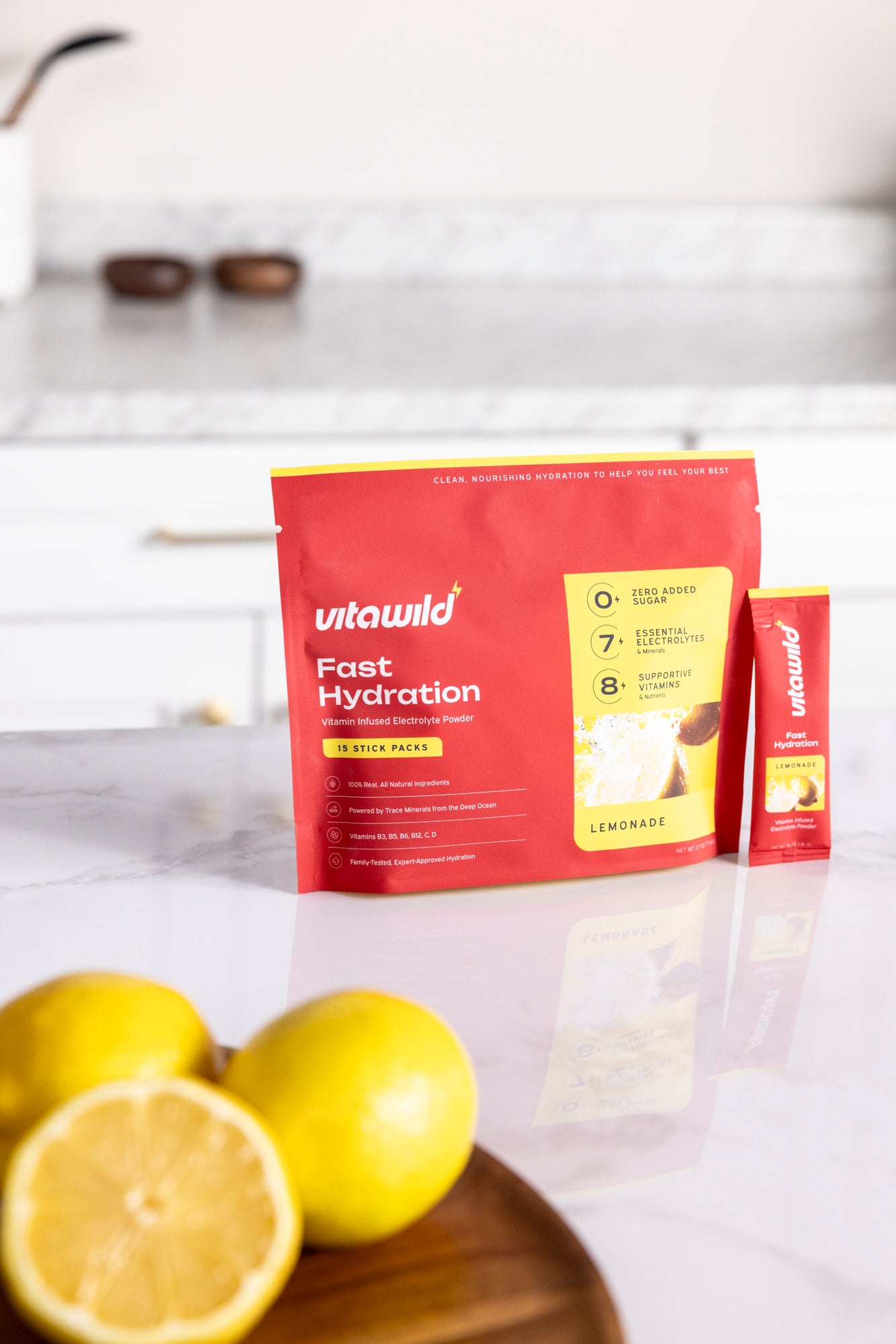
VitaWild was built specifically to close this gap. Each stick pack contains 100mg of ConcenTrace® Trace Minerals — an ionic mineral concentrate sourced directly from the Great Salt Lake in Utah, the same ancient sea bed environment that has concentrated trace minerals over thousands of years. ConcenTrace® contains 84+ naturally occurring trace minerals in ionic form, which means they're already dissolved and absorbed directly without the digestion step that slows down most mineral supplements.
A single VitaWild stick mixed into 16 ounces of filtered water effectively puts back what the filter took out — and adds a complete electrolyte profile on top of it: 450mg sodium, 800mg potassium, and 500mg of coconut water powder for natural hydration cofactors. Zero grams of added sugar.
If you want the mineral replacement without the full electrolyte complex, ConcenTrace® by Trace Minerals is available as a standalone product — unflavored liquid drops that add the 84+ mineral spectrum to any water. It's a simpler intervention for people who mainly want to address the filtration gap rather than full electrolyte support.
One practical note: if you drink reverse osmosis water, remineralization is worth doing consistently — not just after workouts. The mineral depletion from RO isn't only relevant when you're sweating. Your body is drawing on its mineral reserves all day, and a diet built around demineralized water creates a slow, cumulative gap that exercise-focused supplementation alone won't close.
Clean Is Not the Same as Complete
The goal was always better water. Removing contaminants was the right call, and modern filtration delivers on that. But the standard for "better" shouldn't stop at what was taken out — it should include what needs to go back in.
If you drink filtered water, especially RO water, adding a mineral source back isn't undoing the filtration. It's finishing the job. Your cells don't distinguish between "pure" and "healthy" — they just run on what they're given.
Ready to feel the difference?
Try VitaWild — Save 55% TodayFree shipping · 90-day money-back guarantee · Cancel anytime


