

Hydration Journal
Why Most Electrolyte Drinks Cause Bloating (and What to Look for Instead)

Edited October 5, 2026
You started drinking electrolytes to feel better. More energy, less brain fog, faster recovery — maybe your doctor even suggested it. And then, somewhere around the second or third packet, your stomach started doing something you didn't sign up for: gurgling, swelling, a tight uncomfortable pressure that settled in around your midsection and stuck around for hours.
The irony is almost funny. You picked up a product marketed for health and hydration, and it left you feeling worse than before you started. You're not being dramatic. You're not imagining it. And the problem almost certainly isn't electrolytes — it's what's in the drink alongside them.
The Ingredient Nobody Warned You About
The most common culprit behind electrolyte-related bloating is something you've probably walked right past on the label: sugar alcohols.
Sugar alcohols — sorbitol, erythritol, maltitol, xylitol — have become the go-to sweeteners for products marketed as "zero sugar" or "sugar-free." They have fewer calories than regular sugar and don't spike blood glucose the way sucrose does. That sounds like a win. The problem is what happens to them in your digestive tract.
Your small intestine absorbs sugar alcohols poorly. They move through slowly, and when they arrive in your large intestine, the bacteria living there do what bacteria do: they ferment them. That fermentation produces gas — hydrogen, methane, carbon dioxide. The result is the familiar bloating, distension, and cramping that sends people Googling "why does my electrolyte drink give me gas" at 9 p.m. on a Tuesday.
For people with irritable bowel syndrome, this isn't a mild inconvenience. Sugar alcohols are high-FODMAP — they're literally on the list of fermentable carbohydrates that GI specialists tell IBS patients to avoid. If you're managing your diet carefully to keep symptoms under control and then drinking a "healthy" electrolyte packet with sorbitol in it, you've just undone a lot of that effort without knowing it. Nuun, one of the most widely recommended electrolyte tablets, uses sorbitol as a key ingredient.
The Sweetener Problem Goes Deeper
Sugar alcohols aren't the only ingredient worth scrutinizing. Artificial sweeteners — particularly sucralose and acesulfame-K — show up in many of the most popular electrolyte products on the market.
Sucralose (sold as Splenda) has been around long enough that people treat it as a solved problem. It isn't quite. Research over the last several years has found that regular sucralose use may alter the composition of the gut microbiome, reducing populations of beneficial bacteria. For someone who has one diet soda a week, this is probably not a meaningful concern. For someone taking electrolytes every day — which is exactly how most people use them — the cumulative effect is worth thinking about. Liquid IV uses both sucralose and acesulfame-K. G Zero (sugar-free Gatorade) relies on sucralose as well.
Acesulfame-K often travels alongside sucralose in product formulations because the two sweeteners mask each other's aftertaste. It's one of the least studied artificial sweeteners in widespread use. Some people report headaches and GI symptoms with regular consumption, though the research base is thinner than for sucralose. That thinness is itself a reason to be cautious, particularly if you're already dealing with a sensitive gut.
Artificial Colors and Gut Lining Irritation
There's a cleaner way to hydrate.
Try VitaWild — Save 55% TodayFree shipping · 90-day money-back guarantee · Cancel anytime
The electric blue, neon green, and fluorescent orange colors in many sports and electrolyte drinks aren't neutral passengers. FD&C dyes — Red 40, Yellow 5, Blue 1 — have been associated with gut lining irritation in sensitive individuals. For people with leaky gut concerns or inflammatory bowel conditions, these synthetic dyes are worth avoiding even if the research picture isn't fully resolved. They serve no functional purpose in a hydration product. They exist to make the drink look exciting.
When Minerals Themselves Are the Problem
Even if a product is free of sweeteners and dyes, the form of the minerals inside it can cause GI issues. Not all mineral compounds are absorbed equally.
Magnesium oxide is the most commonly used magnesium supplement because it's cheap and has a high elemental magnesium content by weight. It's also poorly absorbed — and when magnesium stays in the intestine rather than crossing into the bloodstream, it draws water into the gut through osmosis. At high doses, this is the mechanism behind using magnesium as a laxative. Even at lower doses, poorly absorbed mineral forms can cause loose stools and cramping, particularly in sensitive individuals.
The form matters. Magnesium citrate and magnesium lactate are absorbed significantly better, which means more of the mineral actually reaches your cells and less of it lingers in your gut causing trouble.
On the other end of the spectrum: high-sugar electrolyte drinks (products with 21g of sugar or more) can cause osmotic diarrhea in some people. When a concentrated sugar solution hits your gut, the body rapidly pulls water into the intestine to dilute it. The effect is fast and unpleasant.
What a Gut-Friendly Electrolyte Actually Looks Like
If you're piecing together what to avoid, the list looks like this: no sugar alcohols (sorbitol, erythritol, maltitol, xylitol), no artificial sweeteners (sucralose, acesulfame-K, aspartame), no artificial colors or preservatives, bioavailable mineral forms rather than oxide forms, and no excessive sugar loads. What's left is actually a short list of products — which explains why so many people cycle through option after option trying to find something that doesn't make their stomach angry.
The Cruelest Irony
The people who most need electrolytes — people managing IBS, those recovering from illness, anyone with a chronically sensitive stomach, people on low-FODMAP diets trying to stay hydrated — are precisely the people who are most likely to react to what's in most electrolyte products. The ingredients that trigger their symptoms are the same ingredients used as cost-effective sweeteners and preservatives across the industry.
Finding something that actually helps without wrecking your gut shouldn't require this much detective work. But here we are.
What to Look for if Your Stomach Is Sensitive
Reading an electrolyte label with a sensitive gut in mind comes down to a few specific checks.
Scan for sugar alcohols first. Anything ending in -ol is your signal: sorbitol, erythritol, xylitol, maltitol. If you see one on the ingredient list, the product is likely to cause fermentation-related gas and bloating, especially with daily use.
Check the artificial sweetener column. Sucralose, acesulfame-K (sometimes listed as Ace-K), and aspartame are all worth flagging if your stomach tends to react. These aren't necessarily problems for everyone, but for people with sensitive guts or IBS, they're common enough triggers to avoid.
Look for FD&C anything. Artificial dyes serve no nutritional purpose. If gut lining irritation is a concern for you, there's no reason to accept them.
Check the mineral forms. "Magnesium oxide" on a label is worth noticing. Citrate and lactate forms are gentler and better absorbed.
For people with sensitive stomachs, LMNT is worth acknowledging as one of the cleanest mainstream options — no sweeteners, no dyes, no sugar alcohols. The tradeoff is a very salty, polarizing taste that many people find difficult to drink consistently, especially daily.
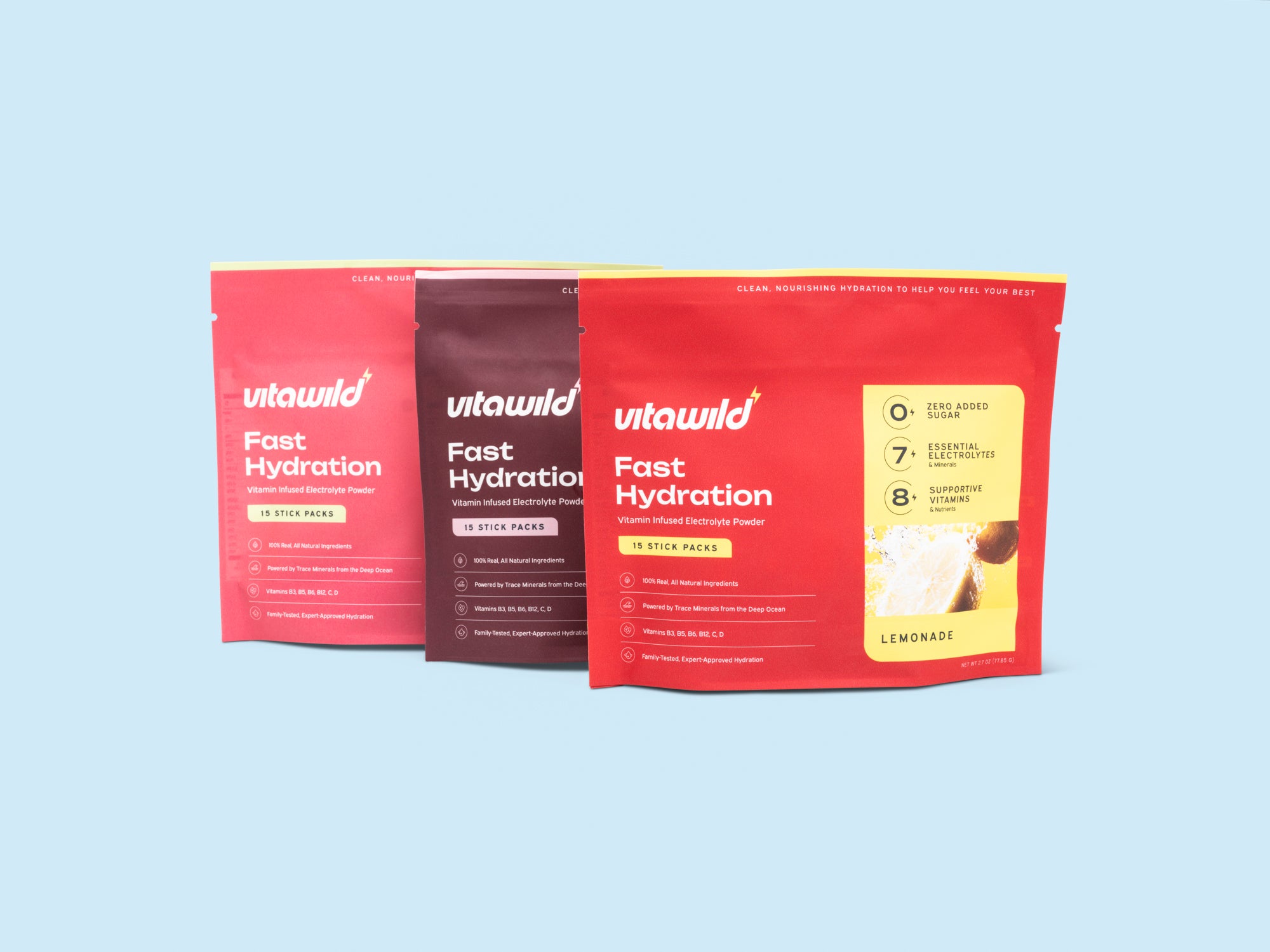
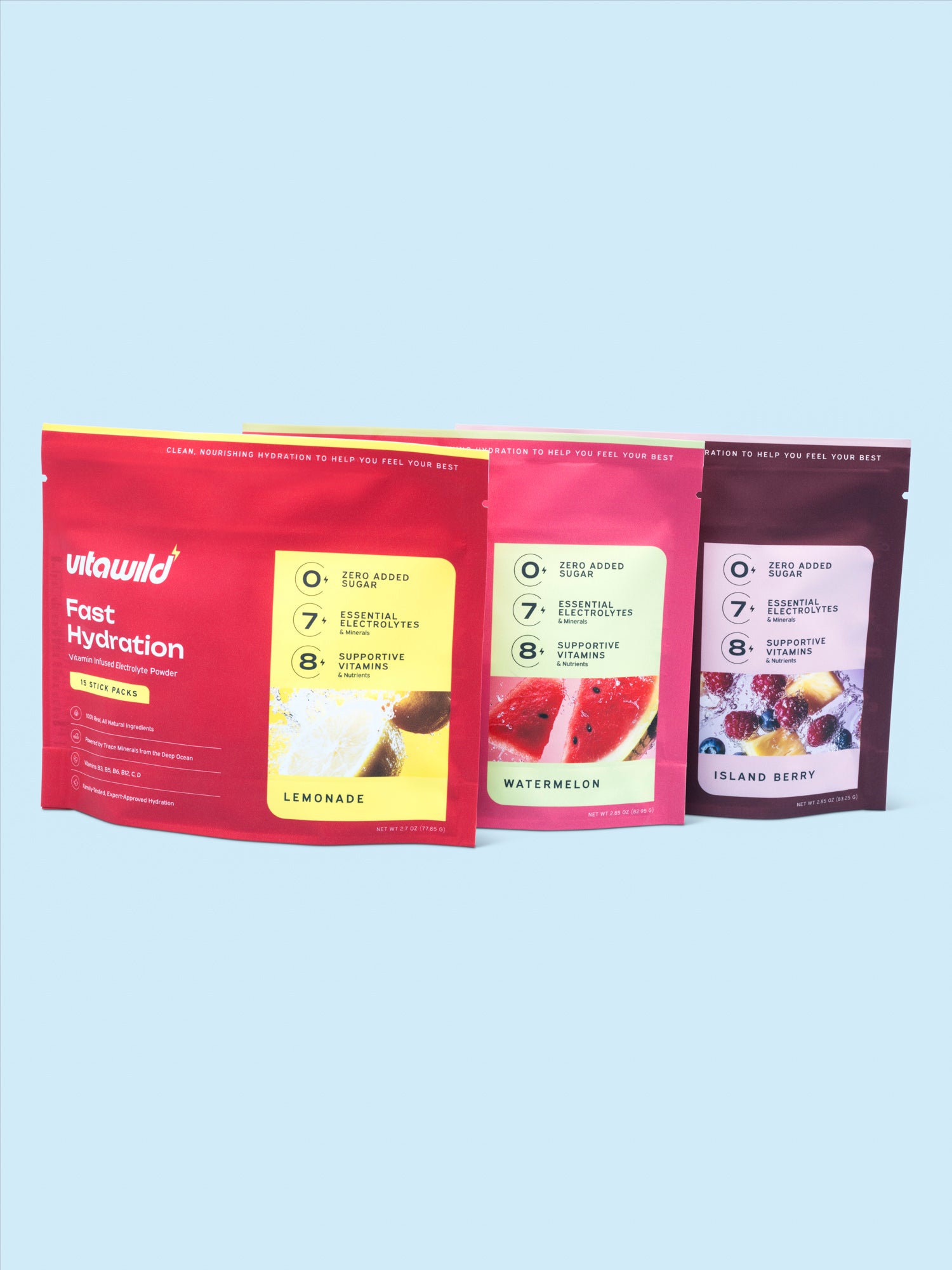
VitaWild was formulated with this exact problem in mind. There are no sugar alcohols, no artificial sweeteners, no artificial colors or preservatives, and 0g of added sugar. The minerals are in citrate and lactate forms, meaning they're absorbed efficiently without lingering undigested in your gut. The magnesium dose — 80mg from magnesium citrate and the trace mineral complex — is deliberately gentle, sitting well below the threshold where magnesium typically causes loose stools (usually 300mg or more of a poorly-absorbed form). ConcenTrace trace minerals are ionic, absorbed directly without requiring digestion. Even the coconut water powder (500mg) adds natural hydration cofactors without the fermentable fibers that can aggravate sensitive guts.
The result is a formulation that works for people who've been failed by other products — not because it makes dramatic promises, but because it doesn't contain the ingredients that caused the problem in the first place. VitaWild is built to be easy on sensitive stomachs, from the sweetener to the mineral forms to the complete absence of artificial anything.
You shouldn't have to choose between staying hydrated and keeping your stomach calm. If your current electrolyte drink is causing bloating, the ingredient list — not the product category — is the place to start. Electrolytes themselves aren't the issue. What surrounds them usually is.
Ready to feel the difference?
Try VitaWild — Save 55% TodayFree shipping · 90-day money-back guarantee · Cancel anytime


