

Hydration Journal
Why Your Body Can't Absorb Most Electrolyte Supplements

You take your magnesium every night. You stir electrolyte powder into your water bottle before every workout. You've spent real money on supplements with clean labels and credible-sounding ingredient lists. And yet your muscles still cramp. Your energy still crashes mid-afternoon. A blood panel comes back showing your magnesium at the low end of normal, and you're left staring at a half-empty tub wondering where you went wrong.
You didn't go wrong. The supplement did.
The problem isn't that you're supplementing — it's that most electrolyte products are built around ingredient forms chosen for cost efficiency, not for what your body can actually use. There's a specific biochemical reason for that distinction, and once you understand it, you'll never read a supplement label the same way again.
How Mineral Absorption Actually Works
Your gut wall is not a passive filter. Minerals don't simply diffuse through intestinal cells the way water does. Most minerals require active transport — they have to bind to specific protein carriers embedded in the intestinal lining before they can cross into the bloodstream. Those transport proteins are selective. They bind well to some mineral forms and poorly to others.
This is where ingredient form becomes everything.
The chemical compound a mineral is attached to — its "form" — determines how readily it dissolves, how well it binds to those transport proteins, and ultimately what percentage of what you swallow actually enters circulation. That percentage is called bioavailability. A supplement that delivers 400mg of magnesium on the label might only put 16mg of usable magnesium into your blood. The rest ends up in your toilet.
Magnesium: The Most Egregious Example
Magnesium oxide is the dominant form of magnesium in cheap supplements. It's also the worst-performing. Multiple clinical studies put magnesium oxide's bioavailability at under 4%. That means if you're taking a standard 500mg magnesium oxide capsule, you're absorbing roughly 20mg — the rest is excreted. This is not a minor inefficiency. It's a near-total failure of delivery.
Magnesium citrate, by contrast, absorbs at roughly 80 to 90%. The citrate molecule is water-soluble, dissociates readily in the gut, and has a much higher affinity for intestinal transport proteins. The practical difference is not marginal — it's the difference between a mineral that reaches your cells and one that transits your digestive tract as expensive fiber.
This is why people spend months taking "magnesium" supplements and still test deficient. They're measuring the label, not what's bioavailable.
Potassium Chloride: The Salt Substitute Problem
Potassium chloride is the form of potassium found in Morton Salt Substitute — the shaker on the table at diners. It's also the form found in most electrolyte supplements, because it's inexpensive and the label still reads "potassium."
Potassium citrate is a different compound. The citrate anion acts as a buffer in the gut and enhances the binding of potassium to intestinal transport proteins compared to the chloride form. It also has a mild alkalizing effect in the body, which is relevant for people managing acid-base balance during intense exercise. Beyond that, excess chloride competes with other anion-dependent transport systems in ways that citrate simply does not.
Chloride is not inherently bad — it's an electrolyte your body needs. But when it's acting as the carrier for potassium in a supplement, it's a cheaper choice with meaningful tradeoffs in uptake efficiency.
Zinc Oxide: What Your Sunscreen and Cheap Supplements Have in Common
There's a cleaner way to hydrate.
Try VitaWild — Save 55% TodayFree shipping · 30-day money-back guarantee · Cancel anytime
Zinc oxide is the white compound in physical sunscreen that creates that chalky cast on your skin. It's nearly insoluble in water. That same insolubility is why it works as a UV barrier — and why it fails as an oral mineral supplement.
Zinc oxide has poor bioavailability as an oral supplement precisely because it doesn't dissolve well enough in the gut to bind adequately to zinc transporters. Zinc citrate and zinc picolinate both absorb significantly better. Research comparing zinc forms has shown the citrate and picolinate forms deliver substantially higher serum zinc levels than oxide at equivalent doses. If your multivitamin or electrolyte supplement lists zinc oxide, you are largely paying to pass it through.
Calcium Carbonate: The Chalk You're Swallowing
Calcium carbonate is chalk. Literally — it's the active ingredient in Tums. It's also the calcium form in the majority of calcium supplements on the market, because it's abundant and costs almost nothing to produce.
The problem is that calcium carbonate requires stomach acid to dissolve before it can be absorbed. Stomach acid production declines significantly with age — particularly after 40 — and is also reduced by the proton-pump inhibitors (PPIs) that millions of people take for acid reflux. For a large portion of supplement users, calcium carbonate passes through largely intact.
Calcium lactate and food-matrix calcium derived from natural sources address this differently. Food-derived calcium — such as from marine algae — is naturally chelated, meaning the calcium is bound within an organic matrix similar to how it exists in food. This allows it to be absorbed via food-uptake pathways that are less dependent on free stomach acid. The mechanism bypasses the dissolution bottleneck entirely.
Ionic Trace Minerals: Why "Already Dissolved" Matters
Most solid mineral supplements have to go through the full digestive process before they can be absorbed — dissolution, ionization, binding to transport proteins. Ionic minerals that are already dissolved in solution skip the first two steps entirely. They're absorbed directly through the gut lining in their ionic form.
This is the principle behind concentrated ionic mineral extracts: because the minerals exist in solution as free ions, the gut doesn't have to break them down first. Absorption begins almost immediately on contact with intestinal tissue. For trace minerals — the ones needed in microgram quantities that still perform critical enzymatic functions — this form of delivery is meaningfully more efficient than trying to dissolve a pressed tablet.
The Price Problem Nobody Talks About
Citrate, glycinate, malate, and lactate mineral forms cost between three and seven times more to manufacture than their oxide and chloride counterparts. That's not a rounding error — it's a margin decision. When a brand is building a product to a price point, ingredient form is one of the first places cost gets cut because most consumers don't know to check.
The result is a supplement industry that has spent decades selling subabsorbable minerals at a premium while the actual delivery to cells remains poor.
How to read a label in 30 seconds: look at what comes after the mineral name in the Supplement Facts panel. "Magnesium citrate" — that's good. "Magnesium oxide" — put it back. The same applies across the board: citrate, glycinate, malate, and lactate are well-absorbed forms. Oxide and chloride, in most contexts, are the budget choice.
The supplement industry has built a multi-billion dollar business on the gap between what a label says and what a body absorbs. The good news is that closing that gap takes exactly one label check. Once you know what the forms mean, the math on what you're actually getting changes completely.
What a Bioavailability-First Formula Actually Looks Like
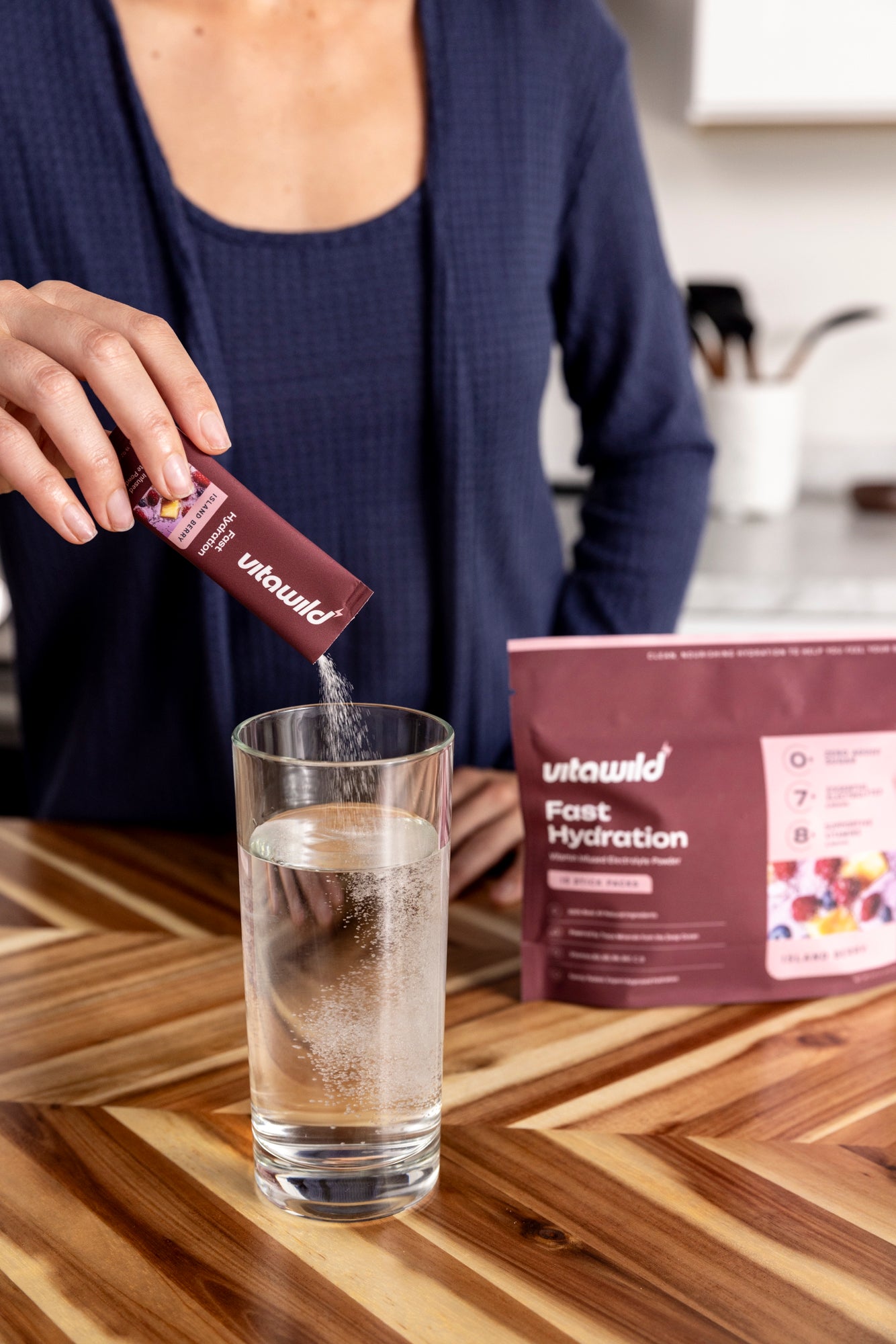
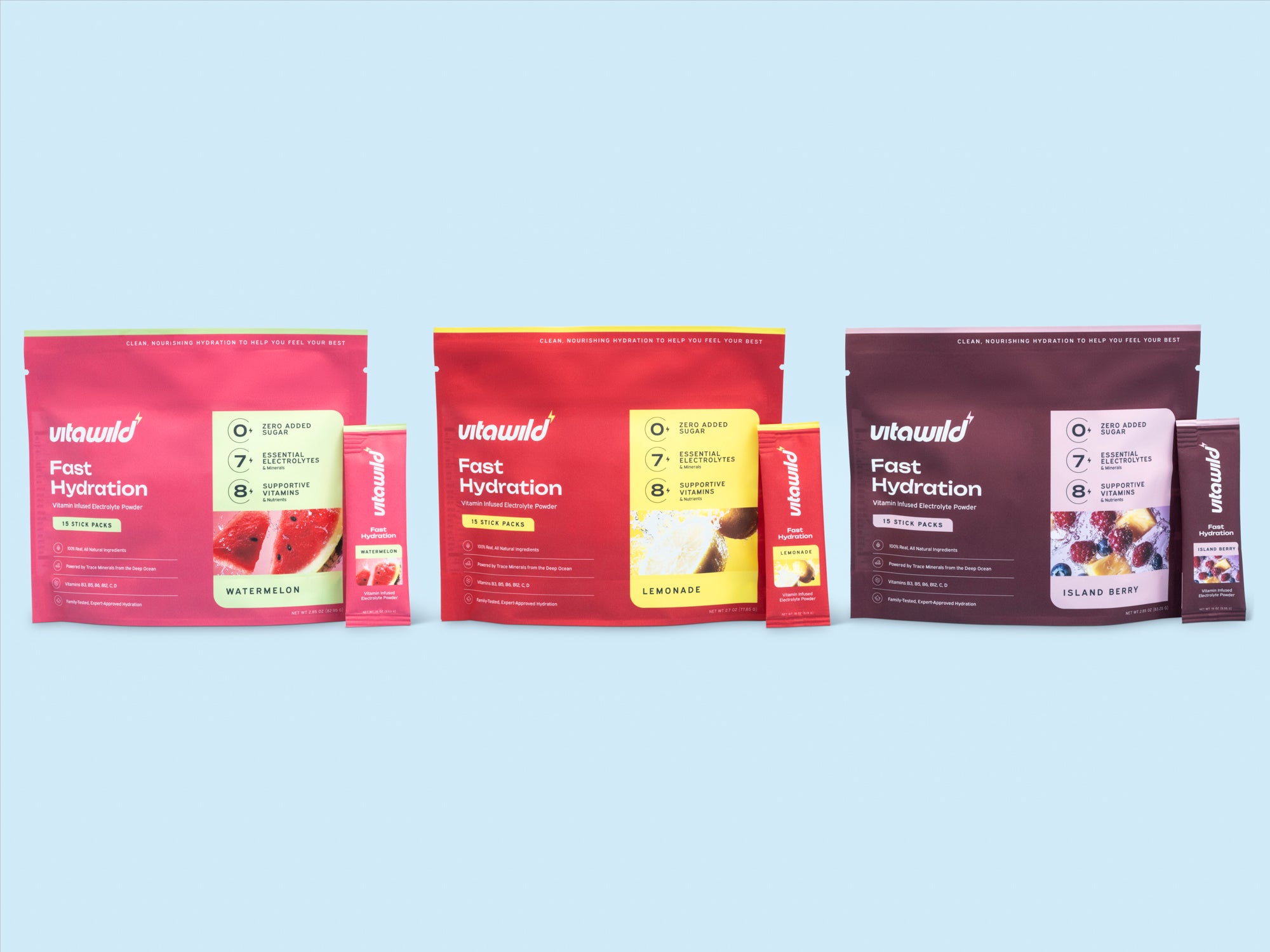
VitaWild was formulated with ingredient form as the primary specification — not as an afterthought. The difference is visible on the label.
Potassium is included as potassium citrate, not potassium chloride. Magnesium is magnesium citrate — the form with clinical absorption rates in the 80 to 90% range, not the oxide form hovering under 4%. Zinc is zinc citrate, not zinc oxide. For calcium, the formula uses calcium lactate combined with Aquamin® F, a marine-derived calcium sourced from Icelandic red algae. Aquamin is naturally chelated within its algal matrix and absorbed through food-uptake pathways — the kind of bioavailability that synthetic calcium carbonate cannot replicate.
For trace minerals, VitaWild uses ConcenTrace® Trace Minerals, a concentrated ionic mineral complex already in ionic, dissolved form. No dissolution step. No waiting for stomach acid to break down a tablet. The minerals are bioavailable from the moment they contact your gut lining.
The formula also includes 500mg of coconut water powder, which contributes natural cofactors — including naturally occurring sugars and phytonutrients — that support mineral uptake. And because VitaWild contains 0g of added sugar, there's no interference with the mineral transport channels that sugar competes with at high concentrations.
These ingredient choices cost more to source and manufacture. That's why most brands don't make them.
A quick note on other supplement categories: if you're shopping for magnesium for sleep specifically, look for magnesium glycinate — the glycinate form crosses the blood-brain barrier more efficiently and has a calming effect that citrate doesn't share. For zinc, picolinate is another well-absorbed form worth seeking out if citrate isn't available. The benchmark is simple: if the label says "oxide," put it back.
You're not bad at absorbing minerals. You may simply have been taking the wrong forms of them. Before your next supplement purchase, take 30 seconds with the Supplement Facts panel. Find the form of each mineral — not just the mineral name. That single check will tell you more about what a product actually delivers than any marketing claim on the front of the package.
Ready to feel the difference?
Try VitaWild — Save 55% TodayFree shipping · 30-day money-back guarantee · Cancel anytime


